
Batch Cooking vs. Component Prepping: Which Approach Actually Fits Your Week?
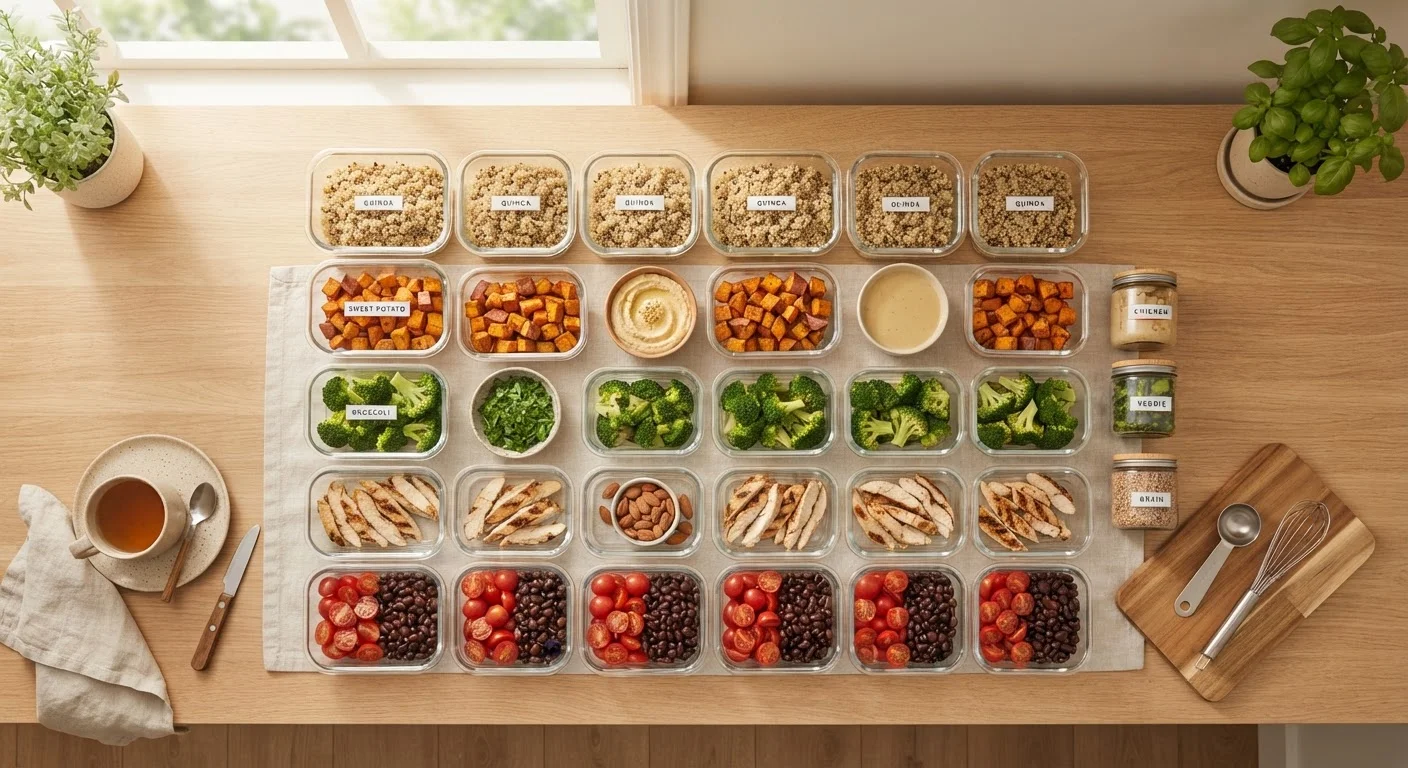
Photo credit: SmartReads.net | Simple Search, Relevant Results
In this article
Batch cooking and component prepping solve different problems. Understand how each method works so you can choose the right fit for your schedule.
Key Takeaways
- Batch cooking produces finished, ready-to-reheat meals; component prepping produces versatile building blocks.
- Batch cooking saves the most time at dinnertime but offers less meal-to-meal variety.
- Component prepping keeps things fresh throughout the week but requires a few minutes of assembly each night.
- Your schedule, appetite for repetition, and storage space should guide which method you choose.
- Hybrid approaches - batching some items, prepping components of others - work well for most busy professionals.
How Each Method Actually Works
Both approaches solve the same core problem - getting nourishing food on the table quickly on busy weeknights - but they solve it in fundamentally different ways.
Batch cooking means preparing complete, fully seasoned dishes in large quantities during a single prep session. You make a pot of turkey chili, a sheet-pan chicken and vegetable bake, or a lentil soup, then portion it into individual containers. At dinnertime, you reheat and eat. The decision is made; the cooking is done.
Component prepping means cooking individual ingredients separately - a grain like farro or brown rice, a protein like roasted chickpeas or grilled chicken thighs, and several vegetables - without combining them into a finished dish. Each night, you assemble those elements into different meals: a grain bowl on Monday, a wrap on Tuesday, a salad on Wednesday. If you want a practical framework for running either session efficiently, see our two-hour weekend prep guide.
| Criterion | Batch Cooking | Component Prepping |
|---|---|---|
| Output | Complete, ready-to-reheat meals | Separate ingredients to assemble |
| Weekend prep time | Moderate to high | Low to moderate |
| Weeknight effort | Minimal (reheat only) | Low (5-10 min assembly) |
| Meal variety | Low - same dish repeated | High - different combos daily |
| Container needs | Many individual portion containers | Fewer, larger storage containers |
| Best schedule fit | Extremely busy weeknights | Flexible or variable evenings |
| Beginner-friendliness | High - one recipe scaled up | Moderate - requires planning combos |
The Real Trade-Offs to Weigh
Neither method is objectively superior - the right one depends on three factors: how much weeknight time you realistically have, how you respond to repetition, and how much refrigerator space you can dedicate to prep.
~42%
Adults who cite time as top barrier to home cooking
According to surveys by the International Food Information Council, lack of time is consistently cited as the leading obstacle to preparing meals at home.
3-4×
More likely to eat home-cooked meals with advance prep
Public health research published in the American Journal of Preventive Medicine found that meal planning is associated with substantially greater frequency of home-cooked meal consumption.
Time investment differs in where it lands. Batch cooking front-loads effort during the weekend session and nearly eliminates weeknight effort. Component prepping distributes effort across the week - prep is often faster on the weekend, but you spend five to ten minutes assembling each night. If your weeknights are genuinely unpredictable, batch cooking is the safer hedge.
Repetition tolerance matters more than most people expect. Research on eating behavior consistently finds that food monotony reduces appetite and can lead people to abandon their meal prep habit altogether. If you already know you lose interest in leftovers by day two, component prepping is more likely to sustain your habit over weeks. Our analysis of why meal prep falls apart mid-week points to boredom as one of the leading culprits.
Storage logistics differ, too. Batch-cooked meals in individual containers are stackable and grab-and-go ready, but they take up significant container space. Component prepping typically uses fewer containers (one per ingredient type) but requires that you have enough bowls or storage trays to keep ingredients separate until assembly.
Building a Hybrid That Works for You
In practice, most time-pressed professionals benefit from combining both approaches rather than committing exclusively to one. A realistic hybrid might look like this: batch cook one complete meal (such as a large pot of soup or a protein-rich stew) that handles three lunches, while simultaneously prepping components - cooked grains, roasted vegetables, a simple dressing - that flex across three different dinners.
The key is aligning your method to the meal slot, not defaulting to one philosophy across the board. Lunches eaten at a desk are prime territory for batch-cooked containers; dinners shared with family benefit from component flexibility. Before your next session, run through our Sunday setup checklist to sequence whichever combination you choose without mid-cook surprises.
A well-stocked pantry amplifies either approach significantly. Versatile staples - canned legumes, whole grains, low-sodium broths, and a range of spices - reduce shopping time and make it easier to build varied meals from components. Our building-block pantry guide outlines exactly which ingredients pull the most weight.
If you are still finding your footing with any kind of advance prep, our beginner's starting point walks through realistic first steps without pressure to overhaul your entire routine at once.
This article is for general informational purposes only and does not constitute medical or nutritional advice. Consult a registered dietitian or qualified healthcare professional for guidance tailored to your individual health needs.

Author
Diet & Meal Plans Editorial Team
Diet & Meal Plans Editorial Team is the collective byline for our editorial team and contributor network. Articles published under this byline or an editorial pen name are researched, written, and reviewed according to our editorial standards for clarity, consistency, and independence before publication.
View all articles →