
Leasing vs. Buying: Matching the Right Approach to Your Situation
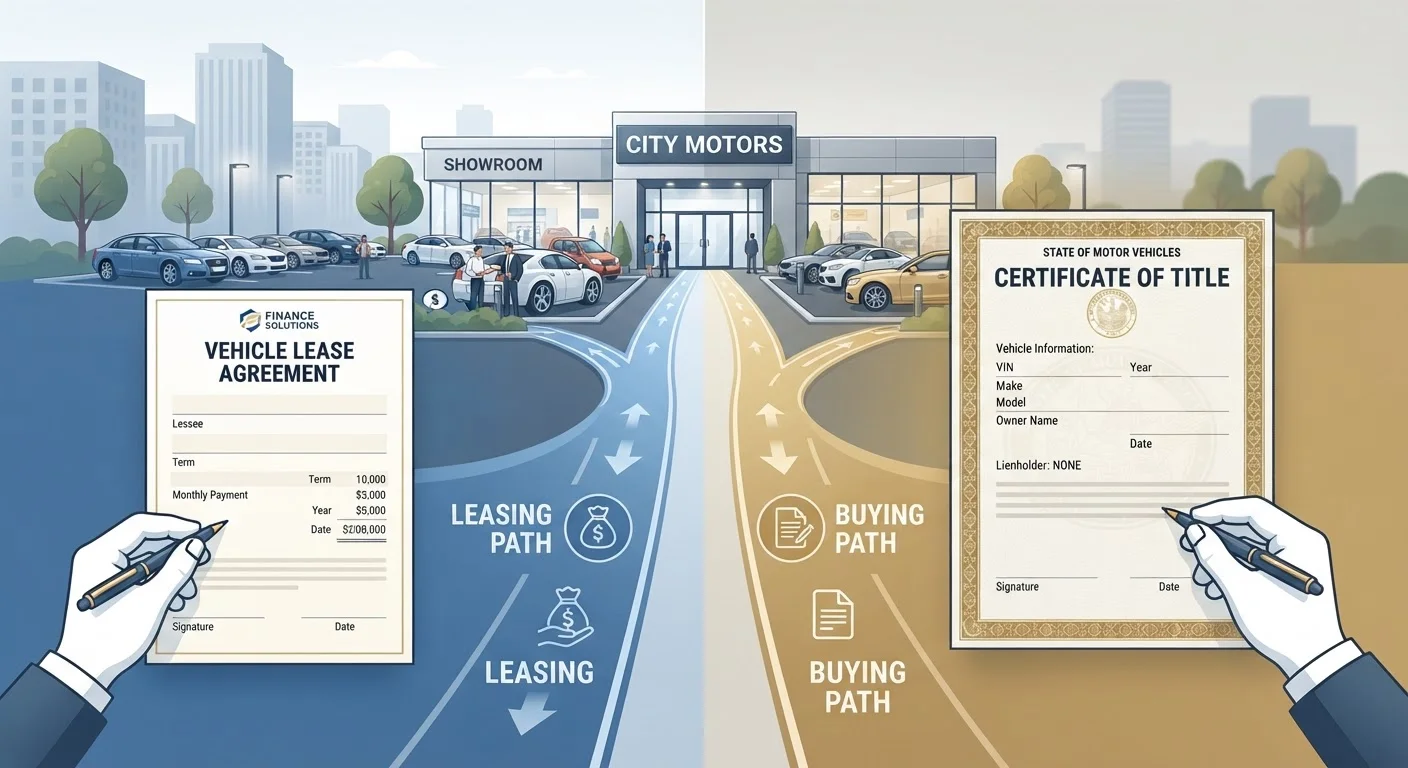
Photo credit: SmartReads.net | Simple Search, Relevant Results
In this article
Neither leasing nor buying is universally better. This breakdown maps each option to the circumstances where it tends to make the most financial sense.
Key Takeaways
- Leasing typically offers lower monthly payments but builds no equity in the vehicle.
- Buying costs more upfront but delivers long-term value once the loan is paid off.
- Mileage limits and lease-end fees can make leasing expensive for high-mileage drivers.
- Your credit score, driving habits, and financial flexibility all influence which path makes sense.
- Neither option is universally superior - the right fit depends on your specific situation.
The Core Difference: Access vs. Ownership
Leasing is essentially a long-term rental. You pay for the portion of the vehicle's value you use during the lease term - typically two to four years - then return the car or buy it out. Buying, whether outright or through a loan, transfers ownership to you. That distinction ripples through every financial and practical dimension of the decision.
When you lease, the automaker's financing arm owns the car. When you buy, you do - or the lender does until the loan clears. This matters for insurance requirements, customization options, mileage freedom, and what happens to the vehicle's value over time. Understanding the structural difference is the starting point for every other comparison. For a full walkthrough of the purchase side, see The Car Buying Process, From First Search to Signed Papers.
Monthly Costs and Cash Flow
Lease payments are almost always lower than loan payments on the same vehicle. That's because you're only financing depreciation - the gap between the car's current value and its projected residual value at lease end - plus interest and fees. On a $45,000 vehicle, a lease might carry monthly payments 25-40% lower than a comparable auto loan, depending on term length and credit profile.
That gap matters to cash-flow-conscious professionals. Lower fixed monthly obligations can free capital for other priorities. But the comparison isn't purely about monthly figures - it's about cumulative cost. When a loan ends, payments stop. Leases roll continuously unless you exit. Over a ten-year horizon, a buyer who pays off a loan and drives the car loan-free for several years will typically spend less in total than someone who leases sequentially.
~30%
Typical lease vs. loan payment gap
Industry estimates suggest lease payments on the same vehicle are commonly 25-40% lower than equivalent loan payments, depending on residual value and credit tier.
15-25%
First-year new vehicle depreciation
Automotive valuation data consistently shows new vehicles lose roughly 15-25% of their value within the first twelve months of ownership.
For a sharper look at how upfront spending affects long-term value, Why Spending More Upfront Can Cost You Less Over Time offers a useful framework.
Mileage, Wear, and the Hidden Costs of Leasing
Most leases cap annual mileage at 10,000 to 15,000 miles. Exceeding those limits typically incurs per-mile overage charges - often $0.15 to $0.30 per mile - billed at lease end. For a professional who commutes heavily, travels for work, or lives in a sprawling metro area, those charges can neutralize the monthly payment advantage quickly.
Wear-and-tear standards also apply. Dents, interior stains, tire wear beyond normal thresholds, and certain modifications can trigger end-of-lease charges. Buyers face none of these constraints. You can put 25,000 miles on a car you own, install a hitch, or skip a car wash without penalty.
Lease-End Charges Can Surprise You
Mileage overages, excess wear fees, and disposition charges (a fee some lessors charge when you return the car without leasing or buying another from them) are billed at lease end - sometimes totaling several thousand dollars. Request a complete list of potential end-of-term fees in writing before signing any lease agreement. Factor these into your monthly cost estimate from day one.
If your annual mileage is variable or hard to predict - common for professionals whose routines shift - buying generally removes the risk of cost overruns that leasing introduces.
Equity, Flexibility, and Long-Term Financial Logic
Every loan payment builds equity. At the end of a loan term, you own an asset that can be sold, traded, or kept for years of payment-free driving. Every lease payment, by contrast, builds no equity - the vehicle returns to the lessor.
That said, depreciation complicates the equity argument. New vehicles typically lose 15-25% of their value in the first year and continue depreciating sharply. If a purchased vehicle loses value faster than loan payments reduce the balance, you can end up temporarily "underwater" - owing more than the car is worth. Leasing sidesteps that exposure since you never own the depreciating asset.
The equity trade-off also intersects with financing choices. Whether you lease or buy, the terms you secure matter significantly. Financing Through a Dealership Versus a Bank or Credit Union breaks down where to shop for the best rates.
| Leasing | Buying | |
|---|---|---|
| Monthly payment | Lower (covers depreciation only) | Higher (covers full vehicle value) |
| Equity built | None | Yes, as loan is paid down |
| Mileage freedom | Capped (typically 10k-15k/yr) | Unlimited |
| Customization allowed | Generally prohibited | Unrestricted |
| Long-term total cost | Higher if leasing continuously | Lower after loan payoff |
| End-of-term flexibility | Return, buy out, or re-lease | Sell, trade, or keep |
| Depreciation risk | Lessor absorbs it | Owner absorbs it |
| Wear-and-tear liability | Charges at lease end | No penalty - your vehicle |
Situations Where Each Option Tends to Win
Leasing tends to make sense when: you drive under 12,000-15,000 miles per year, prefer not to deal with longer-term maintenance concerns, value being in a newer vehicle on a regular cycle, or your professional circumstances make lower monthly obligations a priority. Business owners who can deduct a portion of lease costs as a business expense may also find leasing advantageous - consult a tax professional for your specific situation.
Buying tends to make sense when: you drive high mileage, want to keep a vehicle for seven or more years, have specific needs (towing, modification) that lease terms restrict, or simply want to exit monthly payments eventually. Long-term owners generally come out ahead on total cost once they're past the loan payoff date.
The decision is rarely purely mathematical. Lifestyle fit - how often your needs change, your tolerance for uncertainty, your cash reserves - matters just as much as the numbers.

Author
Autos Editorial Team
Autos Editorial Team is the collective byline for our editorial team and contributor network. Articles published under this byline or an editorial pen name are researched, written, and reviewed according to our editorial standards for clarity, consistency, and independence before publication.
View all articles →