
Eating Patterns Worth Understanding: Mediterranean, Plant-Forward, and Whole Foods Approaches
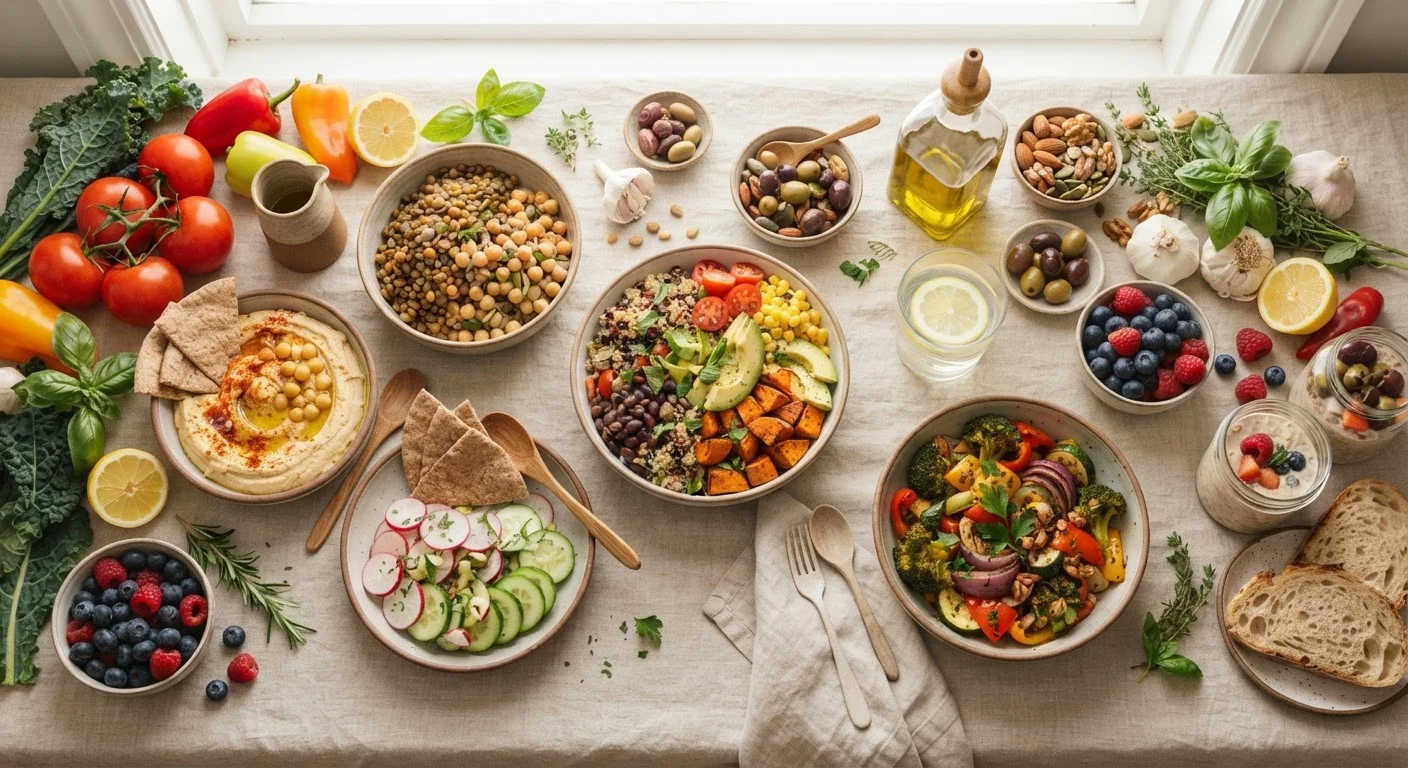
Photo credit: SmartReads.net | Simple Search, Relevant Results
In this article
A clear-eyed look at three evidence-informed eating patterns — what they share, where they differ, and who tends to benefit from each.
Key Takeaways
- Mediterranean, plant-forward, and whole foods approaches are eating patterns, not rigid diets with strict rules.
- All three emphasize minimally processed foods, vegetables, and quality fats over calorie counting.
- Each pattern suits different lifestyles and food preferences - no single approach fits everyone.
- Consistency and flexibility matter more than perfect adherence to any one framework.
- Consult a registered dietitian before making significant changes, especially with health conditions.
What These Three Patterns Actually Mean
The terms Mediterranean diet, plant-forward eating, and whole foods diet circulate constantly in nutrition discussions - sometimes interchangeably, sometimes in contrast. Understanding what each actually describes helps you make a grounded choice rather than following a label.
Mediterranean eating is modeled on traditional dietary habits of countries bordering the Mediterranean Sea. It centers on vegetables, legumes, whole grains, olive oil, fish, and moderate dairy, while limiting red meat and processed foods. It is one of the most extensively studied dietary patterns in nutrition research.
Plant-forward eating does not require full vegetarianism or veganism. It means orienting meals so that plant foods - vegetables, fruits, legumes, whole grains, nuts, seeds - hold the largest share of the plate. Animal products may still appear, but they take a supporting rather than central role.
Whole foods eating is defined primarily by what it avoids: heavily processed, packaged, and refined products. The organizing principle is choosing foods that are close to their natural state - think lentils over lentil chips, oats over instant flavored packets, and whole fruit over juice.
Notice the overlap: all three value vegetables, legumes, and minimally processed ingredients. Their differences are more about emphasis and cultural framing than fundamental nutritional philosophy. See how eating well differs from dieting for additional context on pattern-based versus restriction-based approaches.
How the Patterns Compare Side by Side
The table below maps each approach across practical dimensions that matter to busy professionals - flexibility, protein variety, cost, and ease of adoption.
| Mediterranean | Plant-Forward | Whole Foods | |
|---|---|---|---|
| Core focus | Regional food culture and variety | Plants as primary plate component | Minimizing processed ingredients |
| Animal protein | Fish encouraged; meat limited | Reduced but not eliminated | Permitted; quality emphasized |
| Flexibility | High - broad food variety | Moderate - plant-heavy framing | High - ingredient-based, not cultural |
| Ease at restaurants | Generally straightforward | Requires more navigation | Can be challenging without labels |
| Grocery cost | Moderate; fish can add cost | Often lower with legume focus | Variable; depends on choices made |
| Research depth | Extensive, decades of studies | Growing, especially gut health | Strong on processed food reduction |
| Best starting point for | Varied eaters wanting structure | Those reducing meat gradually | Anyone cutting packaged foods |
One pattern is not objectively superior. Research consistently shows that dietary quality - measured by food variety, vegetable intake, and degree of processing - matters more than strict adherence to any named framework. The case for consistency over perfection applies here: a pattern followed most of the time outperforms a theoretically ideal plan abandoned after two weeks.
Where the Evidence Points
All three patterns have meaningful research support, though the depth of evidence varies.
The Mediterranean approach has perhaps the longest research track record. Large observational studies and controlled trials associate it with lower markers of cardiovascular risk and improved metabolic health indicators, though no eating pattern can guarantee specific health outcomes for any individual.
Plant-forward eating has gained substantial research attention. Studies suggest that increasing plant food variety correlates with better gut microbiome diversity - a link explored further in our article on eating patterns that support a diverse gut microbiome.
The whole foods approach is less studied as a defined protocol, but the underlying principle - reducing ultra-processed food consumption - is consistently associated with positive health signals across multiple research populations.
Start with One Meal, Not One Pattern
Rather than overhauling your entire diet, try applying whichever framework resonates most to just one meal per day. A whole-grain lunch bowl or a plant-heavy dinner side is a genuinely meaningful shift over time. Small, repeatable changes build lasting habits far more reliably than all-or-nothing overhauls. Once one meal feels natural, expanding from there becomes much less daunting.
None of these patterns are magic, and all carry the same core caveat: individual responses vary. Factors including genetics, activity level, sleep, and existing health conditions all interact with diet. Anyone managing a chronic condition or considering significant dietary changes should consult a registered dietitian or qualified healthcare professional before proceeding.
Making a Practical Choice (or Combining Elements)
For busy professionals, the most important question is not "which pattern is best?" but "which pattern fits my actual week?"
- If you travel frequently or eat out often, the Mediterranean framework tends to translate well to restaurant menus - fish, salads, olive oil, and grain sides are widely available.
- If you cook at home most nights, the whole foods approach gives clear, ingredient-level guidance that simplifies grocery shopping without requiring cultural familiarity.
- If you are motivated by sustainability alongside health, plant-forward eating offers a practical entry point that does not require eliminating any food group.
Blending elements is entirely reasonable. A weekday lunch of lentil soup with whole grain bread fits all three frameworks simultaneously. The goal is a shift in overall dietary pattern - not perfect category membership. For practical structure around when and how much to eat, the guide to meal timing and portion habits offers complementary strategies that work alongside any of these approaches.
If you are unsure whether your current habits are moving in a helpful direction, a weekly self-check like the one in Your Weekly Healthy Eating Audit can help you spot both gaps and genuine progress.
This article is for general informational and educational purposes only and does not constitute medical or dietary advice. Consult a qualified healthcare professional or registered dietitian before making significant changes to your eating habits, particularly if you have an existing health condition.

Author
Diet & Meal Plans Editorial Team
Diet & Meal Plans Editorial Team is the collective byline for our editorial team and contributor network. Articles published under this byline or an editorial pen name are researched, written, and reviewed according to our editorial standards for clarity, consistency, and independence before publication.
View all articles →