
Before You Start Prepping: A Sunday Setup Checklist
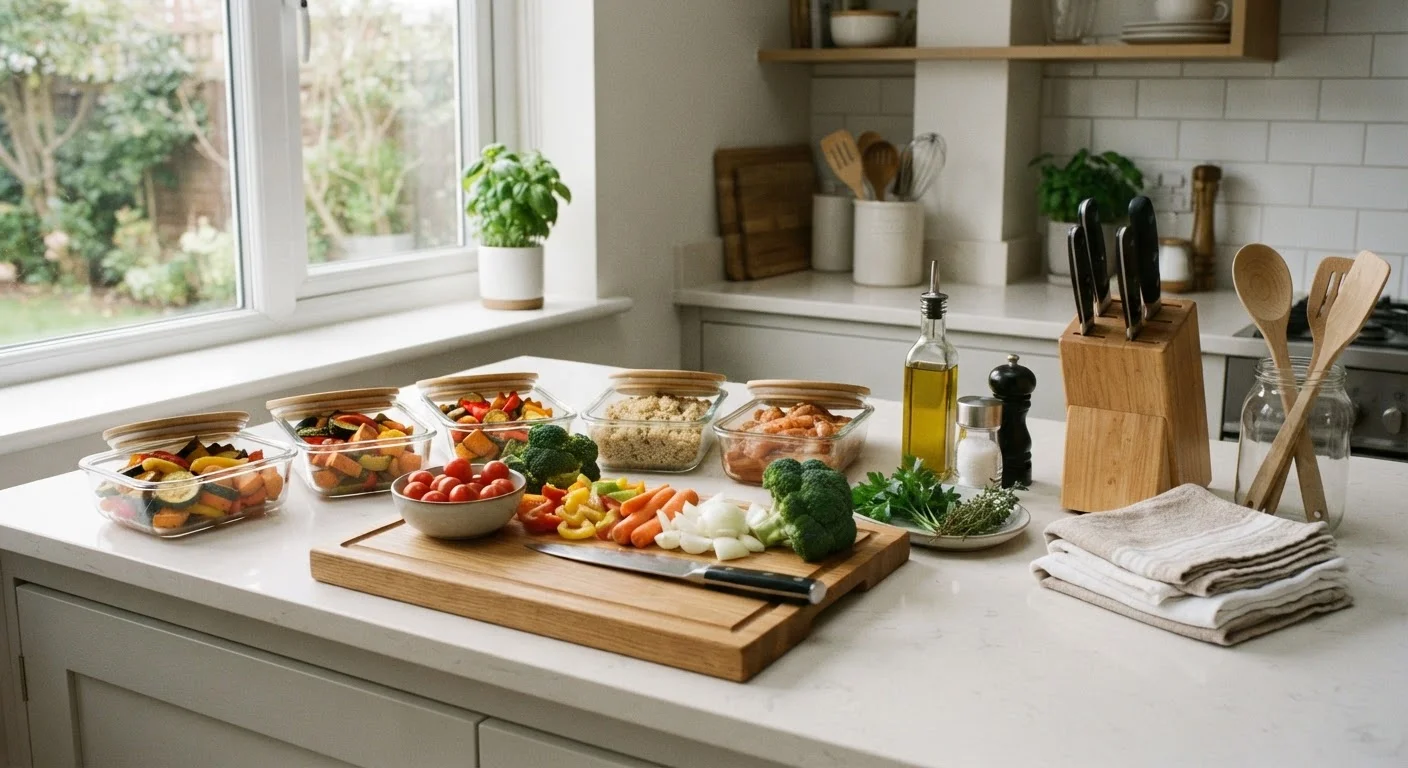
Photo credit: SmartReads.net | Simple Search, Relevant Results
In this article
Run through this quick checklist before your prep session begins — covering equipment, storage, quantities, and sequencing — to avoid mid-cook surprises.
Key Takeaways
- Running a pre-prep checklist prevents mid-session delays caused by missing containers, dull knives, or forgotten groceries.
- Sequencing your cooking tasks before you start - not during - is what keeps a two-hour session actually two hours.
- Knowing your storage capacity upfront determines how much food you can realistically prep in one session.
- Equipment readiness and ingredient verification are the two steps most meal preppers skip - and later regret.
Why a Setup Checklist Changes Everything
Most meal prep delays don't happen at the stove - they happen in the ten minutes before it, when you discover the sheet pan is dirty, the lids don't match the containers, or you're missing a key ingredient. A short setup routine eliminates that friction before it starts.
This checklist is designed to take 10-20 minutes on Sunday morning before your actual cooking begins. If you're newer to batch cooking, our beginner's guide walks through the foundational principles that make this kind of prep habit sustainable long-term.
Think of this as the pre-flight check for your kitchen. Once it's done, you cook with confidence instead of interruptions.
Grocery and Ingredient Verification
Equipment and Kitchen Readiness
Storage and Portioning
Sequencing and Time Planning
Tools, Storage, and Sequencing: The Big Three
After running through the checklist, it helps to understand why these three categories carry so much weight.
Equipment readiness
A prep session slows to a crawl when you're hand-washing a colander mid-session or hunting for a lid. Checking and staging your equipment first - pots, pans, knives, cutting boards, measuring cups - means everything you reach for is already where you expect it.
Airtight food storage containers
Store prepped meals and components safely in the fridge or freezer throughout the week.
Sheet pans and a Dutch oven or heavy-bottomed pot
Handle bulk roasting, simmering, and batch cooking across multiple recipes simultaneously.
Sharp chef's knife and cutting board
Efficient, safe prep of vegetables, proteins, and herbs - a dull knife dramatically slows every task.
Kitchen scale or measuring cups
Portion proteins and grains consistently so each meal container is balanced and predictable.
Dry-erase markers or masking tape and a pen
Label containers with meal name and date before storage to avoid mid-week guesswork.
Storage capacity
This one catches people off guard. It's easy to prep more food than your fridge can store properly. Before you begin, count your clean, lidded containers and estimate how much they'll hold. If you're cooking for five days of lunches and dinners, you'll need more space than it intuitively feels like. Understanding your realistic storage ceiling shapes how much you should actually prep - not how much you wish you could.
Sequencing your cook
The most efficient prep sessions front-load passive cooking (roasting vegetables, simmering grains, baking proteins) so active tasks fill the wait time. Sketching a rough order of operations - even just mentally - before you start is what separates a smooth two-hour window from a chaotic three-hour one. For a deeper look at structuring that time, see The Weekend Prep Window guide.
Don't Skip the Storage Count
It's surprisingly easy to finish a full prep session and realize you don't have enough clean containers - or enough fridge space - to store everything safely. Prepped food left at room temperature for more than two hours enters the temperature range where bacterial growth accelerates. Always verify your storage capacity before you start cooking, not after.
The approach you use - batch cooking everything at once versus prepping flexible components - also affects how you sequence tasks. Batch cooking and component prepping solve different problems, so it's worth knowing which model fits your week before you plan your sequence. And if your pantry staples aren't already stocked, a well-stocked pantry reduces weekly decision fatigue - that's a parallel habit worth building alongside your prep routine.
This article is for general informational and educational purposes only. It is not a substitute for personalized nutrition or medical advice. Consult a qualified healthcare professional for guidance specific to your health needs.

Author
Diet & Meal Plans Editorial Team
Diet & Meal Plans Editorial Team is the collective byline for our editorial team and contributor network. Articles published under this byline or an editorial pen name are researched, written, and reviewed according to our editorial standards for clarity, consistency, and independence before publication.
View all articles →