
Meal Timing, Portion Habits, and Hydration: Building a Routine That Sticks
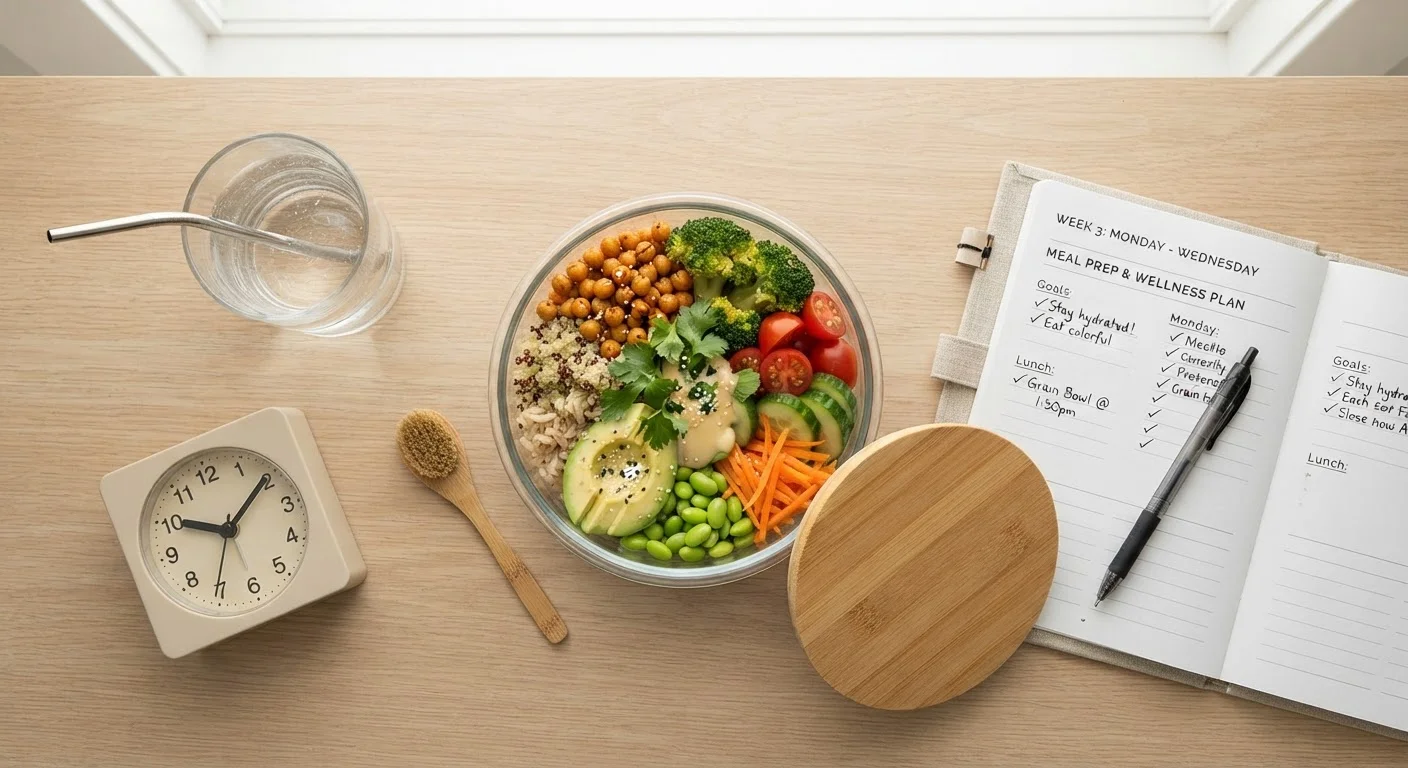
Photo credit: SmartReads.net | Simple Search, Relevant Results
In this article
Structure your eating day without rigid rules. Practical habits around timing, portions, and water intake that fit a busy schedule.
Key Takeaways
- Eating at roughly consistent times each day supports hunger regulation without requiring a rigid schedule.
- Portion awareness - not calorie counting - is a sustainable, low-effort way to manage food intake.
- Staying hydrated throughout the workday can reduce false hunger signals and support focus.
- Starting with one or two small habits is more effective than overhauling your entire routine at once.
Why Routine Beats Willpower at the Table
For busy professionals, the biggest barrier to eating well isn't motivation - it's decision fatigue. When your calendar is packed, food choices become one more thing competing for mental bandwidth. A simple, repeatable routine removes that friction.
The goal here isn't a perfect diet or a regimented meal plan. It's a loose structure around when you eat, how much you eat, and how much you drink - habits that run quietly in the background without demanding constant attention. As explored in why consistency beats perfection, repeatable habits reliably outperform strict diets over time.
“Healthy eating is less about the perfect diet and more about reliable, repeatable behaviors that require minimal willpower over time.”
— B.J. Fogg, Behavior scientist and author of 'Tiny Habits'
Meal Timing: Consistency Over Precision
Your body's internal clock - the circadian rhythm - influences digestion, hunger hormones, and even how efficiently you metabolize food. Eating at roughly predictable times each day, even if those times shift slightly, helps keep hunger signals calibrated so you're less likely to arrive at meals ravenous or to graze mindlessly through the afternoon.
You don't need a fixed schedule down to the minute. Instead, try anchoring meals to reliable daily events:
- Breakfast: within 30-60 minutes of starting your workday
- Lunch: linked to a recurring morning meeting or natural midday break
- Dinner: tied to a commute, evening wind-down, or a family routine
Snacks, if you use them, work best as planned bridges between meals rather than reactive responses to energy dips. If late-afternoon hunger is a recurring pattern, a small protein- or fiber-rich snack scheduled in advance is more effective than raiding the vending machine. Pairing this approach with some advance planning - see a two-hour weekend prep window - makes consistent timing much easier to maintain.
Portion Habits: Low-Effort Awareness That Adds Up
Portion awareness doesn't require a food scale or app. The aim is to develop a rough, reliable sense of appropriate amounts so you're not constantly calculating. Calorie counting and portion awareness are both valid tools, but for many busy people, the latter is simply more sustainable day-to-day.
A practical reference system that requires nothing but your hand:
- Protein (meat, fish, legumes): roughly one palm
- Vegetables: one fist or more - this is the category to be generous with
- Carbohydrates (grains, starchy vegetables): one cupped handful
- Fats (oils, nuts, cheese): one thumb
Plating food before you sit down - rather than eating from a shared dish or container - is one of the simplest environmental shifts that naturally supports portion awareness. It also slows the pace of eating, which matters: research on satiety signaling suggests it takes roughly 20 minutes for fullness cues to register.
~20 min
Delay before fullness signals reach the brain
Research on gastric signaling suggests satiety hormones take roughly 20 minutes to register after eating begins, underscoring the value of eating slowly.
60-70%
Of the body's weight that is water
The U.S. National Academies of Sciences, Engineering, and Medicine notes that fluid needs vary by individual, but consistent daily intake supports all major body functions.
For a broader look at how your eating environment shapes choices, the path-of-least-resistance pantry guide is a practical companion resource.
Hydration: The Simplest Habit With the Biggest Payoff
Mild dehydration is easy to overlook and surprisingly common among desk workers. The sensation can mimic hunger, contribute to afternoon energy dips, and make concentration harder. Consistent fluid intake throughout the day - primarily water - is one of the easiest levers to pull.
Rather than tracking ounces, build hydration cues into existing moments:
- A glass of water before opening your laptop in the morning
- Refilling your water bottle each time you stand up for a break
- A glass with each meal and any snack
Coffee and tea contribute to fluid intake, though they're not a complete substitute for water. Sugary drinks add calories without the same hydration benefit. If plain water feels uninspiring, adding a slice of lemon, cucumber, or a few mint leaves is a simple way to make it more appealing without adding sugar.
Patterns like skipping water for long stretches or routinely eating past fullness are worth noticing - they're among the habits that quietly undermine gut health without obvious warning signs.
This Is General Information, Not Medical Advice
The guidance in this article is intended for healthy adults looking to build practical eating habits. It is not a substitute for personalized advice from a registered dietitian or your healthcare provider. If you have a medical condition, are pregnant, or have specific dietary needs, please consult a qualified professional before making changes.
Building a Routine That Actually Sticks
The most effective routine is the one you can actually maintain. Start with one change in one category - perhaps consistent meal timing or a morning water habit - rather than attempting to restructure everything at once. Once that behavior feels automatic, add another.
A useful weekly self-check: Are your hunger and fullness levels feeling more predictable? Are you ending most meals feeling satisfied rather than stuffed or still hungry? Are you reaching for water regularly? These signals, outlined in detail in a practical weekly eating audit, tell you far more than any number on a scale.
If you're building from scratch, meal prep for beginners offers a realistic starting framework that pairs naturally with the timing and portioning habits covered here. And for the broader picture of managing weight within a realistic schedule, weight management on a packed schedule covers evidence-informed strategies that complement a consistent daily eating structure.
This article is for general informational and educational purposes only. It is not a substitute for personalized advice from a registered dietitian, physician, or other qualified healthcare professional. Consult a healthcare provider before making significant changes to your diet, especially if you have a medical condition or specific health concerns.

Author
Diet & Meal Plans Editorial Team
Diet & Meal Plans Editorial Team is the collective byline for our editorial team and contributor network. Articles published under this byline or an editorial pen name are researched, written, and reviewed according to our editorial standards for clarity, consistency, and independence before publication.
View all articles →