
Seasonal Color Palettes: The Framework Behind the Trend
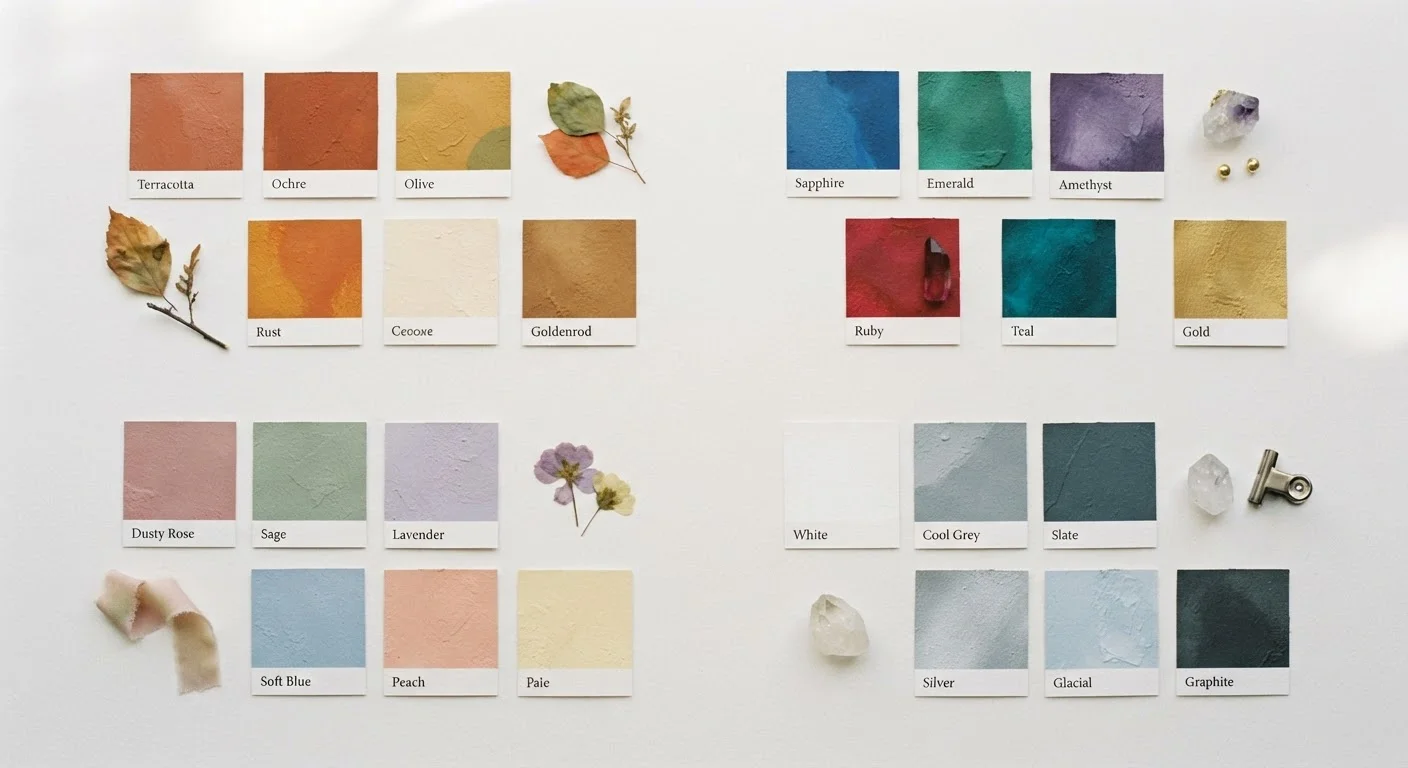
Photo credit: SmartReads.net | Simple Search, Relevant Results
In this article
Spring, summer, autumn, winter — seasonal color analysis has a real theoretical foundation. Learn what it measures and where its limits lie.
Key Takeaways
- Seasonal color analysis categorizes people into four types based on undertone, contrast level, and chroma - not birth season.
- The framework is descriptive, not prescriptive - it identifies tendencies, not rules you must follow.
- Undertone (warm vs. cool) is the single most influential variable in determining which palette fits you.
- Modern expansions of the system use 12 or more sub-seasons to account for the full range of human coloring.
- Color analysis has real theoretical grounding but significant subjective limitations - professional assessment helps, but isn't mandatory.
What the Four Seasons Actually Measure
Despite the meteorological naming, seasonal color analysis has nothing to do with the time of year you were born. The four season labels - Spring, Summer, Autumn, Winter - are shorthand for four distinct combinations of three color properties: undertone (warm or cool), value (the lightness or darkness of your natural coloring), and chroma (how vivid or muted your features appear).
Understanding those three dimensions is the real foundation. If you haven't already, brushing up on core color vocabulary will make the framework considerably easier to navigate.
- Spring: Warm undertone, light-to-medium value, clear and bright chroma
- Summer: Cool undertone, light-to-medium value, soft and muted chroma
- Autumn: Warm undertone, medium-to-deep value, muted and earthy chroma
- Winter: Cool undertone, medium-to-deep value, high contrast and vivid chroma
Each category maps to a palette of colors that share those same properties - so a Spring palette leans toward peach, coral, and warm ivory, while a Winter palette favors icy blue, true red, and stark white. The logic is harmony: colors that share your coloring's characteristics tend to look integrated rather than jarring against your face.
4 → 12+
Seasonal sub-types in modern color analysis
The original four-season model has been expanded by practitioners into 12 or more sub-seasons to better capture the diversity of human coloring.
3
Core color dimensions the system measures
Undertone, value (light vs. dark), and chroma (muted vs. vivid) are the three independent variables that define each seasonal palette category.
The Role of Undertone - and Why It Dominates
Of the three variables, undertone carries the most weight. Warm and cool are not simply aesthetic preferences - they describe the actual color bias embedded in your skin, regardless of its depth. A person with very deep skin can have a cool undertone (bluish or neutral); someone with fair skin can run warm (golden or peachy). Depth and undertone are independent axes.
The classic test is to look at the veins on your inner wrist in natural light: greenish veins tend to indicate warm undertones; bluish or purple veins suggest cool. Neither test is foolproof - it's a starting point, not a verdict.
Test Undertone in Natural Light
Artificial lighting - especially warm incandescent or cool fluorescent - distorts how undertones appear on skin. For any undertone assessment, step near a window with indirect daylight. Hold fabric swatches or makeup shades close to your jaw (not your hand) for the most accurate read, since facial skin is what you're dressing.
Once undertone is established, chroma becomes the deciding factor between the two types within each warmth category. A warm-toned person with vivid, high-contrast features reads as Spring; one with more earthy, blended coloring reads as Autumn. Contrast levels play a particularly significant role in determining which palette intensity suits you best.
Limits, Nuances, and the 12-Season Expansion
The original four-season model is a simplification - useful, but imprecise for the full spectrum of human coloring. Many practitioners now use an expanded 12- or 16-season system that introduces sub-categories like Soft Autumn, True Summer, or Bright Winter. These refinements account for the many people who sit on the boundary between two types.
The framework also has documented limits worth knowing:
- Subjectivity: Assessing chroma and undertone involves judgment calls. Two analysts can reach different conclusions for the same person.
- Coloring changes: Hair dye, tanning, and aging all shift visible coloring - sometimes enough to affect which palette resonates.
- Individual variation: Some people have genuinely neutral undertones or very balanced chroma, making a clean seasonal assignment difficult.
Color analysis is also sometimes conflated with cultural beauty standards about which skin tones are "ideal" for certain palettes - a distortion the framework doesn't support and that has no theoretical basis. Several persistent color myths have emerged from this kind of misapplication, and they're worth unlearning.
“Color analysis is most useful when treated as a vocabulary for understanding your own coloring - not a verdict about which colors you're allowed to wear.”
— Beauty Editorial Team, Color Theory & Beauty Analysis
Applying the Framework Without Overcomplicating It
For everyday beauty decisions, seasonal color analysis works best as a directional guide rather than a rigid rulebook. Start with undertone - warm or cool - and use that to filter foundation shades, blush families, and lip tones. Then layer in chroma: if your coloring is naturally soft and blended, gravitate toward muted, dusty shades rather than highly saturated ones. If you have strong natural contrast, bolder colors tend to read as intentional rather than overwhelming.
The color wheel offers a complementary lens - once you understand which hue families suit your palette, you can use wheel relationships to build cohesive makeup looks or identify accent shades that add interest without clashing.
It's also worth noting that seasonal color analysis addresses your natural coloring - the features you have without makeup or hair color. If you've altered your hair color significantly, you may find your current look resonates with a different seasonal palette than your natural one would. That flexibility is a feature, not a flaw. Skin itself shifts across the year too, which can subtly affect how colors read at different times.
This article is for informational and educational purposes only. It does not constitute professional beauty, medical, or dermatological advice. For personalized guidance, consult a qualified color analyst or beauty professional.
Frequently Asked Questions

Author
Beauty Editorial Team
Beauty Editorial Team is the collective byline for our editorial team and contributor network. Articles published under this byline or an editorial pen name are researched, written, and reviewed according to our editorial standards for clarity, consistency, and independence before publication.
View all articles →