
Seasonal Skin Shifts: Adapting Your Natural Routine Year-Round
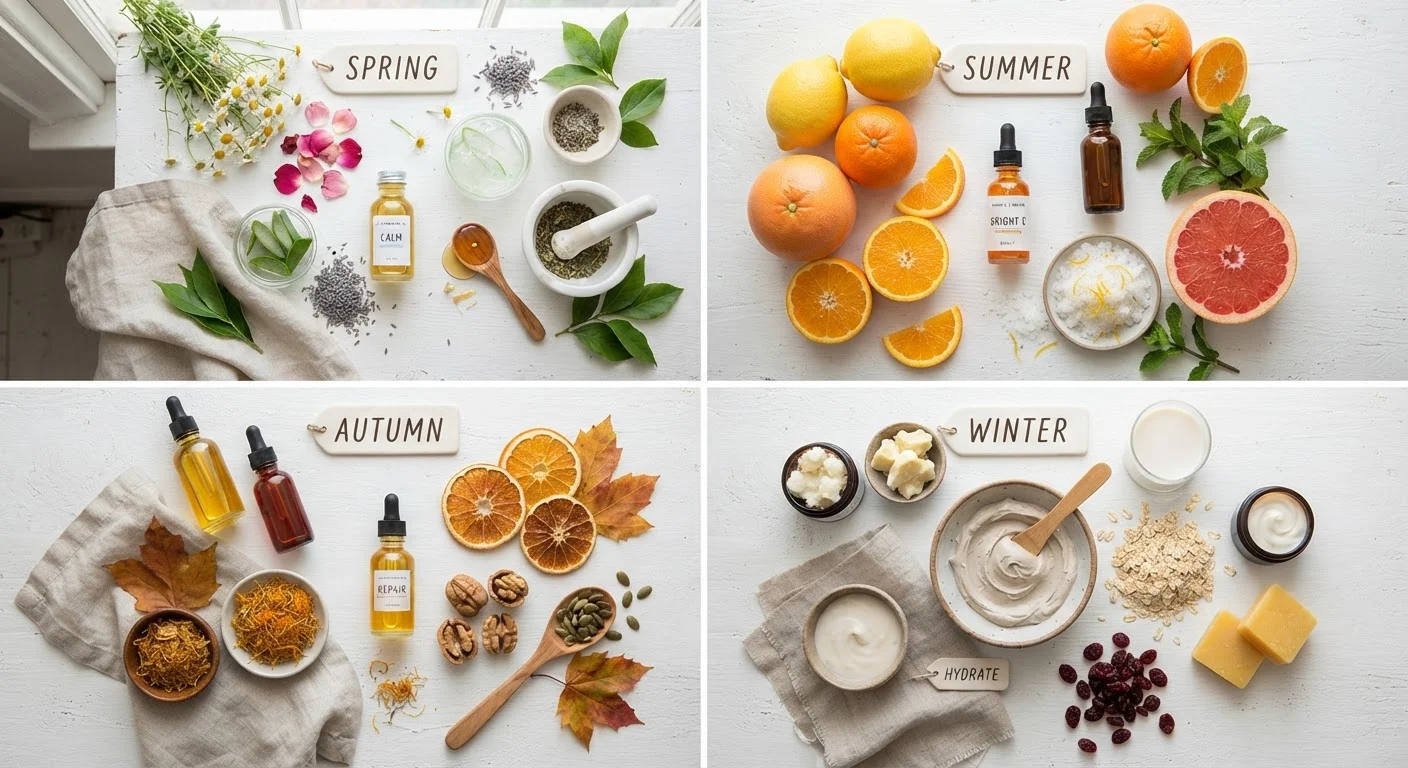
Photo credit: SmartReads.net | Simple Search, Relevant Results
In this article
How humidity, temperature, and UV exposure change your skin's needs — and how to adjust a natural ingredient-based routine for each season.
Key Takeaways
- Humidity, temperature, and UV intensity each alter how your skin produces oil, retains moisture, and responds to ingredients.
- A natural, ingredient-focused routine can be adapted seasonally with small, targeted swaps rather than a complete overhaul.
- Sun protection remains essential year-round, even when UV index feels lower in winter months.
- Over-stripping in dry seasons and over-occluding in humid ones are the most common seasonal skincare mistakes.
- Listening to your skin's real-time feedback - not just the calendar - is the most reliable guide to seasonal adjustments.
Why Your Skin Responds to Seasonal Change
Skin is a dynamic organ, continuously calibrating oil production, hydration retention, and barrier integrity in response to its environment. Seasonal shifts in humidity, temperature, wind exposure, and UV intensity create measurably different conditions that affect how the stratum corneum - the outermost skin layer - functions. Lower humidity accelerates transepidermal water loss (TEWL), the passive evaporation of moisture through the skin barrier. Higher temperatures stimulate sebaceous gland activity, increasing oil output.
Understanding the science behind natural ingredients is foundational here. Learn how plant-based compounds like humectants and antioxidants actually work on skin before you start swapping products by season - ingredient function, not marketing language, should drive your decisions.
~40%
Drop in relative indoor humidity in winter with heating
Research on indoor air quality consistently shows that central heating can reduce indoor relative humidity from typical comfort ranges to below 30%, accelerating skin moisture loss.
Up to 80%
Of UV rays that penetrate cloud cover
According to the Skin Cancer Foundation, up to 80% of ultraviolet rays can pass through clouds, underscoring the need for year-round sun protection.
Best Practices for Adapting Your Routine Each Season
Effective seasonal adaptation is less about buying new products and more about intelligently adjusting what you already use. The practices below apply across skin types and work best with natural, ingredient-transparent formulations.
Shift your moisturizer weight with seasonal humidity changes - lighter in summer, richer in winter.
High ambient humidity in summer reduces TEWL naturally, making heavy occlusives unnecessary and potentially pore-clogging. In winter, low indoor and outdoor humidity dramatically increases water loss through the barrier, requiring more substantive emollients and occlusives to compensate.
Maintain broad-spectrum sun protection year-round, adjusting application frequency rather than dropping it entirely in winter.
UVA radiation - the primary driver of photoaging - remains relatively constant across seasons and penetrates cloud cover. Reducing SPF application in autumn and winter is one of the most common habits that quietly accelerates skin aging over time. Some well-intentioned routines work against your skin over time - inconsistent sun protection is among the most consequential.
Reduce exfoliation frequency in winter and increase gentle exfoliation in humid, higher-sebum seasons.
Cold, dry air already stresses the skin barrier. Adding chemical or physical exfoliation on a summer schedule compounds barrier disruption and increases sensitivity. Conversely, warmer months often bring higher sebum production and greater buildup, where mild exfoliants - like fruit-derived AHAs - support clarity without aggression.
Add a humectant-rich serum as a winter layer between cleansing and moisturizing.
Humectants such as hyaluronic acid, glycerin, and aloe vera draw water toward the skin surface. In dry winter conditions, applying them to slightly damp skin - then sealing with an occlusive - maximizes moisture retention rather than allowing ambient humidity to draw water out of the skin instead.
Reassess your cleanser's strength at each seasonal transition - avoid over-cleansing in winter.
Foaming, surfactant-heavy cleansers can disrupt the skin's acid mantle and strip natural lipids. In summer this may be tolerated better due to higher oil production; in winter it can leave the barrier vulnerable to irritation, tightness, and sensitivity.
Quick Wins You Can Act On Today
You don't need to wait for a seasonal shift to start building a more responsive routine. These immediate actions help you stay ahead of the curve - and protect your skin in the process. If you're building a minimal routine from scratch, a five-minute natural morning routine is a practical starting point.
Natural Doesn't Always Mean Gentle Year-Round
Some natural actives - like citrus-derived AHAs, retinol from rosehip oil, or essential oil concentrates - can increase photosensitivity or cause barrier irritation when used at the wrong seasonal intensity. Common missteps in natural beauty routines include overusing actives without considering seasonal context. Always patch test when introducing or reintroducing seasonal ingredients, and scale back any active if your skin signals irritation.
This article provides general skincare information for educational purposes only. It is not medical advice. If you have a diagnosed skin condition or concerns about your skin health, consult a qualified dermatologist or healthcare professional before making changes to your routine.

Author
Beauty Editorial Team
Beauty Editorial Team is the collective byline for our editorial team and contributor network. Articles published under this byline or an editorial pen name are researched, written, and reviewed according to our editorial standards for clarity, consistency, and independence before publication.
View all articles →