
Your Gut Microbiome: What It Is and Why Scientists Care So Much About It
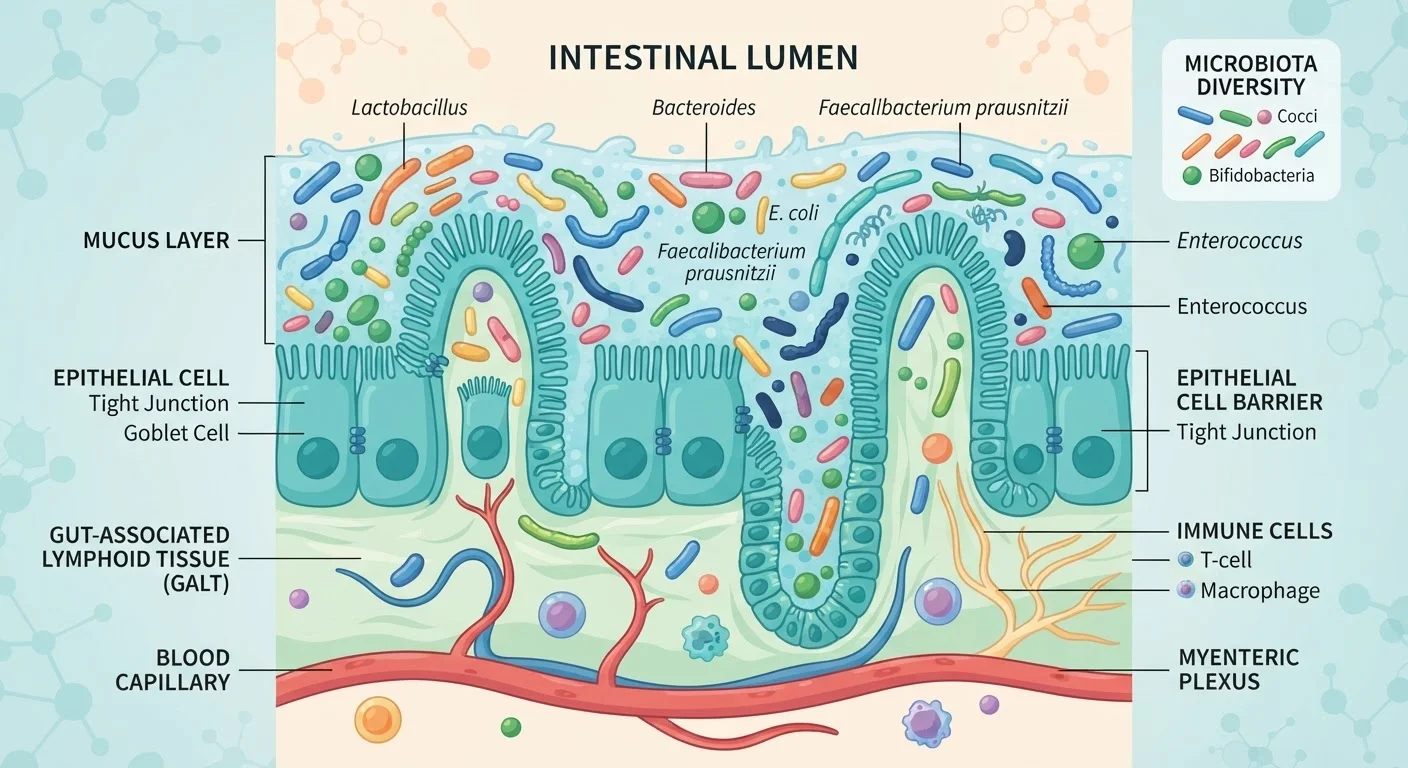
Photo credit: SmartReads.net | Simple Search, Relevant Results
In this article
A clear, jargon-free breakdown of the gut microbiome, what it does, and why researchers consider it central to overall health.
Key Takeaways
- Your gut hosts roughly 38 trillion microbial cells, outnumbering human cells at nearly a 1:1 ratio.
- Microbiome diversity - variety of microbial species - is consistently linked to better health outcomes in research.
- Diet is one of the most powerful and modifiable factors shaping your gut microbial community.
- The microbiome influences immunity, metabolism, inflammation, and even mood-related signaling.
- No supplement or product can replace a varied, fiber-rich diet for long-term gut health.
What Lives in Your Gut - and Why It Matters
Picture a dense, thriving ecosystem - more species packed into a tablespoon of colon contents than in a handful of rainforest soil. That ecosystem is your gut microbiome, and scientists have been working to understand it since the early 2000s when large-scale genomic sequencing finally made it possible to identify microbes without growing them in a lab.
The numbers alone are staggering. Estimates suggest roughly 38 trillion microbial cells occupy your gastrointestinal tract, with bacterial species numbering in the hundreds. These organisms collectively carry approximately 150 times more unique genes than the human genome itself - a genetic library your body draws on for functions it cannot perform alone.
~38 trillion
Microbial cells in the human gut
Estimates published in Cell (Sender et al., 2016) revised earlier figures, placing gut microbial cells at roughly equal to the total number of human cells.
150x
More microbial genes than human genes
The Human Microbiome Project found that the collective gut microbiome genome dwarfs the human genome in gene count, enabling metabolic functions our own DNA cannot code for.
~70%
Of immune tissue located in the gut
Immunology research consistently identifies the gut-associated lymphoid tissue (GALT) as the largest immune compartment in the human body.
For busy professionals who don't have time to wade through research, the core message is practical: your microbiome is less a passive background feature and more an active organ system. How well it functions has downstream effects on digestion, immunity, inflammation, and energy - all things that affect how you feel on a typical workday.
The Jobs Your Microbes Are Doing Right Now
Your gut microbes are not simply along for the ride. They carry out functions your own biology depends on, including:
- Fiber fermentation: Bacteria like Bifidobacterium and Lactobacillus species break down plant fibers your digestive enzymes cannot process, producing short-chain fatty acids (SCFAs) - particularly butyrate - that fuel the cells lining your colon.
- Immune regulation: Roughly 70% of immune tissue is located in or around the gut wall. Gut microbes play an active role in training immune cells to distinguish between harmful invaders and harmless substances, which influences inflammatory responses throughout the body.
- Vitamin synthesis: Certain gut bacteria synthesize vitamins including B12, folate, and vitamin K2 as metabolic byproducts.
- Barrier maintenance: A healthy microbial community supports the integrity of the gut lining, which acts as a selective barrier controlling what enters the bloodstream.
Understanding these roles helps explain why researchers have connected microbiome disruption - sometimes called dysbiosis - to a wide range of health conditions, from digestive disorders to metabolic disease and mood disturbances. If you want a plain-language glossary of terms like these, see our Gut Health Glossary for quick reference.
“The microbiome is not a collection of hitchhikers. It is a co-evolved ecosystem that is integral to human physiology in ways we are only beginning to map.”
— Justin Sonnenburg, Professor of Microbiology and Immunology, Stanford University, and co-author of research on diet and microbiome diversity
What Shapes Your Microbiome - and What You Can Do
Your microbiome is not fixed. It is shaped continuously by factors both within and outside your control.
Diet is the most modifiable lever. Research consistently shows that diets high in diverse plant foods - vegetables, legumes, whole grains, nuts, seeds, and fruits - are associated with greater microbial diversity. Fermented foods like yogurt, kefir, kimchi, and sauerkraut can also introduce beneficial organisms and support existing ones. For practical patterns to build on, our guide to everyday eating patterns that support a diverse gut microbiome breaks down what researchers associate with a healthier microbial community.
Antibiotics are one of the most significant disruptors. While often medically necessary, they reduce overall microbial diversity - sometimes for months. This is not a reason to avoid them when needed, but it does underscore why rebuilding through diet afterward has value.
Sleep, stress, and physical activity are increasingly recognized as microbiome-relevant. Chronic sleep disruption and sustained psychological stress have been linked to shifts in microbial composition, while regular physical activity is associated with higher diversity.
Start With Plant Variety, Not Supplements
Before reaching for a probiotic capsule, consider how many different plant foods you eat in a typical week. Researchers often use 30 different plant foods per week as a rough benchmark associated with greater microbiome diversity. Herbs, spices, nuts, and seeds all count - small additions add up quickly without overhauling your entire diet.
Conversely, some habits quietly work against gut health over time without obvious warning signs. Our article on habits that quietly undermine gut health covers the patterns worth paying attention to.
Separating Genuine Science from the Noise
Interest in the gut microbiome has generated an enormous commercial market - supplements, functional foods, detox protocols, and testing kits, many of which outrun the evidence supporting them. The research is genuinely exciting, but it is also early-stage in many areas.
Population studies show associations between microbiome characteristics and health outcomes, but establishing direct causation is far more difficult. What works for gut health in one person may have a different effect in another, partly because microbiomes are so individually variable.
If you have come across bold claims about curing conditions through gut interventions, our piece on widely believed gut health claims that don't hold up to scrutiny is a useful reality check. And if you are curious how the gut communicates with your brain and influences mood, explore our explainer on the gut-brain connection.
This article is for general informational and educational purposes only and does not constitute medical advice. If you have digestive symptoms or specific health concerns, consult a qualified healthcare professional.
Frequently Asked Questions

Author
Diet & Meal Plans Editorial Team
Diet & Meal Plans Editorial Team is the collective byline for our editorial team and contributor network. Articles published under this byline or an editorial pen name are researched, written, and reviewed according to our editorial standards for clarity, consistency, and independence before publication.
View all articles →