
The Gut-Brain Connection: How Your Digestive System Talks to Your Mind
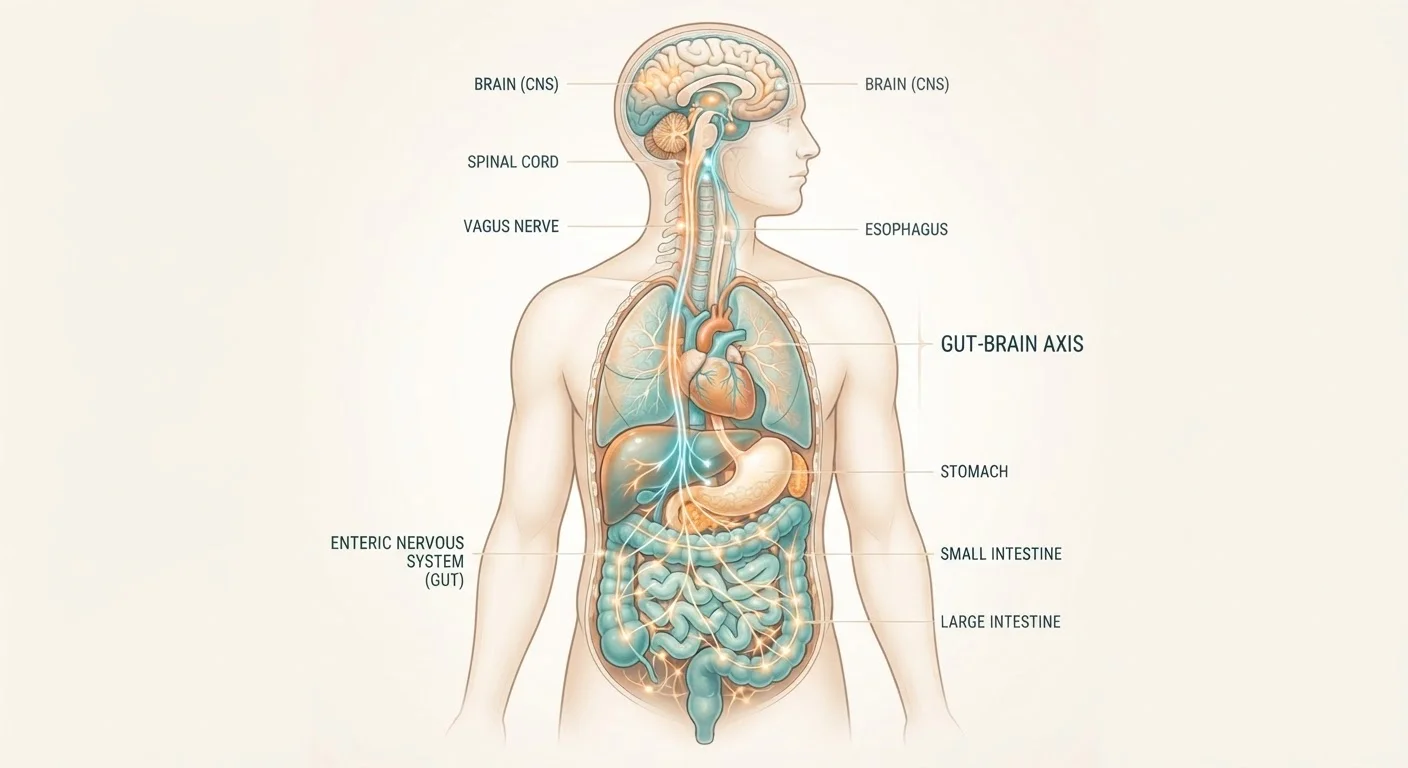
Photo credit: SmartReads.net | Simple Search, Relevant Results
In this article
The gut and brain are in constant communication. Here's what that relationship means for mood, stress, and everyday mental clarity.
Key Takeaways
- Your gut and brain communicate continuously through nerves, hormones, and immune messengers.
- The gut produces roughly 90% of the body's serotonin, a neurotransmitter tied to mood regulation.
- Chronic stress can disrupt gut function, and gut imbalances can amplify stress responses.
- Diet is one of the most direct levers you can pull to support gut-brain health.
- Consulting a healthcare professional is important before making significant dietary or lifestyle changes.
Two Systems, One Conversation
Most people think of the brain and gut as separate systems - one manages thought, the other handles digestion. In reality, they are in near-constant dialogue. The gut-brain axis is the term researchers use to describe this bidirectional communication network, which runs through the nervous system, the endocrine (hormone) system, and the immune system simultaneously.
At the center of this network is the vagus nerve, a long, branching nerve that travels from your brainstem through your chest and into your abdomen. It functions like a high-bandwidth cable, carrying information about gut conditions upward to the brain and relaying the brain's stress and emotional signals back down to the digestive tract. Remarkably, studies suggest that roughly 80-90% of the signals on this nerve travel from gut to brain - not the other way around.
This means your gut isn't just reacting to your mental state. It's actively shaping it. To understand your gut microbiome's broader role, it helps to first understand this foundational relationship.
The Gut as a Hormone and Neurotransmitter Factory
One of the more surprising findings in gut-brain research is that the digestive system produces many of the same chemical messengers as the brain. The gut manufactures an estimated 90% of the body's serotonin - a neurotransmitter closely associated with mood, sleep, and appetite regulation. It also produces dopamine precursors and gamma-aminobutyric acid (GABA), a calming neurotransmitter.
These chemicals don't just circulate locally. They influence the signals being sent along the vagus nerve and interact with immune cells in the gut lining. When the microbial community in your gut - what scientists call the microbiome - is diverse and balanced, this chemical production tends to be stable. When it's disrupted, the downstream effects can include changes in mood, energy, and stress resilience.
“The gut is not just a digestion machine. It is an organ of perception, sending a continuous stream of information to the brain about the state of the body's interior.”
— Emeran Mayer, Gastroenterologist and author of research on the gut-brain axis
Stress, the Gut, and the Feedback Loop
The gut-brain relationship is a feedback loop, and stress is one of its most visible triggers. When you encounter a stressor - a deadline, a difficult conversation, a disrupted night of sleep - your brain signals the release of hormones like cortisol and adrenaline. These slow digestion, reduce blood flow to the gut, and can alter the composition of gut bacteria over time.
In turn, a gut under stress sends distress signals back to the brain, which can heighten anxiety and reduce the threshold for future stress responses. For busy professionals who operate in persistently demanding environments, this loop can become self-reinforcing. Recognizing it is the first step to interrupting it.
If you notice digestive changes that track closely with stressful periods, that pattern is worth flagging with a healthcare provider. Common gut symptoms can carry real information about your body's stress load.
Practical Habits That Support the Axis
You don't need a specialist protocol to start supporting the gut-brain connection. Several well-studied lifestyle factors make a measurable difference:
- Eat a wide variety of plants. Diverse fiber sources feed diverse gut bacteria, and microbial diversity is linked to more stable mood-regulating signals. Dietary patterns associated with microbiome diversity are worth understanding in more detail.
- Minimize ultra-processed foods. These are associated with lower microbial diversity and higher gut inflammation - both of which can dampen the quality of gut-brain signaling.
- Prioritize consistent sleep. Sleep deprivation affects gut motility and the integrity of the gut lining, compounding stress effects.
- Move regularly. Physical activity has been shown to increase the abundance of beneficial gut bacteria and support vagal tone - the strength and responsiveness of the vagus nerve.
Small, consistent changes matter more than dramatic overhauls. And if certain everyday habits are quietly working against your gut health, identifying them is half the work.
This article is for general informational and educational purposes only and is not a substitute for professional medical advice. Always consult a qualified healthcare provider regarding any health concerns or before making significant dietary or lifestyle changes.
Frequently Asked Questions

Author
Diet & Meal Plans Editorial Team
Diet & Meal Plans Editorial Team is the collective byline for our editorial team and contributor network. Articles published under this byline or an editorial pen name are researched, written, and reviewed according to our editorial standards for clarity, consistency, and independence before publication.
View all articles →