
Retinol, Peptides, and Vitamin C: Understanding the Evidence Behind Popular Anti-Aging Ingredients
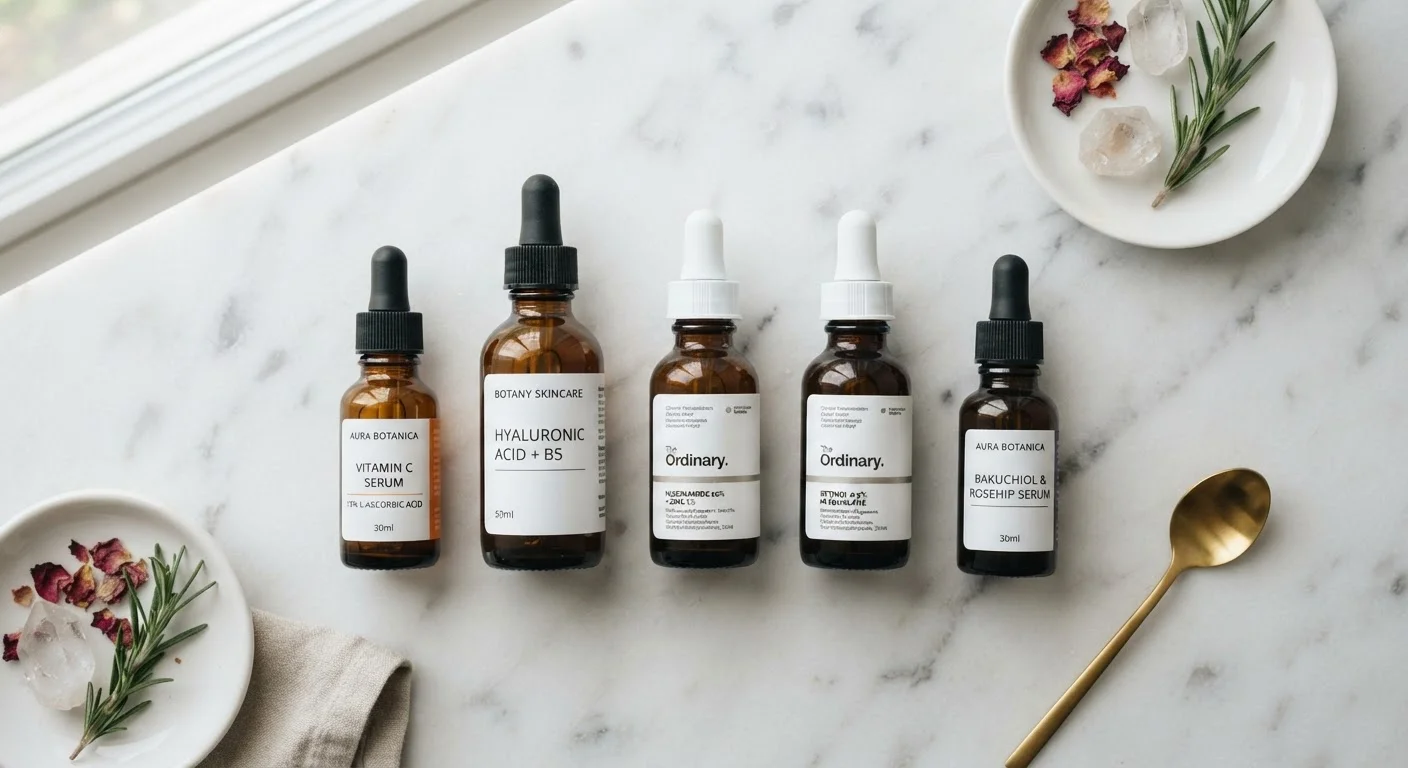
Photo credit: SmartReads.net | Simple Search, Relevant Results
In this article
A research-grounded breakdown of how the most talked-about skincare ingredients work — and what the evidence actually supports.
Key Takeaways
- Retinol has the most robust clinical evidence of any over-the-counter anti-aging ingredient available.
- Vitamin C's antioxidant action is well-supported, but formulation stability significantly affects its efficacy.
- Peptides show promise in research, but the evidence base is younger and less consistent than retinol's.
- These three ingredients address aging through distinct biological pathways and can be complementary.
- Skin tolerance, formulation quality, and consistency of use matter as much as the ingredient itself.
How Each Ingredient Works on Skin
Before comparing these actives, it helps to understand what they're actually doing at a cellular level. To understand the broader biological context, see what science says about how skin ages.
Retinol is a vitamin A derivative that binds to retinoic acid receptors in skin cells, upregulating genes associated with collagen production and accelerating the natural cell-turnover cycle. It has been studied in controlled clinical trials since the 1980s, with consistent evidence for reducing fine lines and improving skin texture over time.
Vitamin C (most commonly as L-ascorbic acid) functions primarily as an antioxidant, neutralizing free radicals generated by UV exposure and pollution. It also plays a cofactor role in collagen synthesis and has demonstrated melanin-inhibiting properties, making it relevant for both photoaging prevention and hyperpigmentation. Curious how it compares to plant-based antioxidants? the science behind natural ingredients explores that distinction.
Peptides are short chains of amino acids that function as signaling molecules. Certain peptides - such as matrikines - can signal the dermis to produce more collagen by mimicking fragments of damaged extracellular matrix. Others, like carrier peptides, improve the delivery of trace minerals involved in skin repair. The mechanism is biologically plausible and supported by in-vitro and some clinical data, though the overall body of evidence is less extensive than retinol's.
Side-by-Side: Evidence, Stability, and Tolerance
Understanding where each ingredient excels - and where it has real limitations - is essential for making informed choices.
| Retinol | Vitamin C (L-Ascorbic Acid) | Peptides | |
|---|---|---|---|
| Strength of evidence | Extensive; decades of RCTs | Strong for antioxidant action; moderate for anti-aging | Promising; growing but less consistent |
| Primary mechanism | Cell turnover, collagen gene upregulation | Antioxidant defense, collagen cofactor | Collagen signaling, matrix support |
| Skin tolerance | Can cause dryness, peeling at higher doses | Generally well-tolerated; tingling at low pH | High; suitable for sensitive skin |
| Formulation stability | Degrades with light; use airtight packaging | Highly unstable; requires airtight, opaque packaging | Relatively stable in most formulations |
| Best time to use | Evening (photosensitive) | Morning (antioxidant synergy with SPF) | Morning or evening |
| Addresses hyperpigmentation | Indirectly via cell turnover | Yes, via melanin inhibition | Limited evidence |
One consistent finding across dermatological literature is that formulation matters enormously. Vitamin C, for instance, degrades rapidly when exposed to light and air; products in opaque, airtight packaging with a pH below 3.5 retain efficacy significantly better. Similarly, retinol is photosensitive and should generally be reserved for evening use. For a deeper look at retinol's potency spectrum, retinoids vs. retinol clarifies how different forms of vitamin A compare.
Start Low, Go Slow With Retinol
If you're new to retinol, beginning at a lower concentration - typically 0.025% to 0.1% - and using it two to three nights per week reduces the likelihood of the initial dryness and flaking that dermatologists call the 'retinization' period. Gradually increasing frequency as tolerance builds is a widely recommended approach. Always follow with a non-comedogenic moisturizer to support the skin barrier.
Using These Ingredients Together
A common misconception is that these actives must compete or cancel each other out. In practice, the three ingredients address aging through sufficiently distinct pathways that strategic layering is both logical and supported by clinical rationale.
A well-structured approach might look like this:
- Morning: Vitamin C serum applied to clean skin, followed by moisturizer and broad-spectrum SPF. Pairing vitamin C with sun protection makes sense given that UV-generated free radicals are a primary target of ascorbic acid's antioxidant action. See SPF as an anti-aging tool for the evidence behind daily photoprotection.
- Evening: Retinol or a peptide-rich treatment, depending on skin tolerance and the stage of a routine. Those new to retinol typically benefit from starting at lower concentrations and increasing gradually to minimize irritation.
Not every claim made about anti-aging actives holds up to scrutiny. For context on what doesn't work, anti-aging claims that don't hold up provides a useful counterpoint. And if terminology like free radicals, collagen synthesis, or cell senescence is unfamiliar, our anti-aging skincare glossary defines the key terms used throughout this research space.
This article is for general informational and educational purposes only. It does not constitute medical or dermatological advice. Consult a qualified dermatologist or healthcare professional for guidance specific to your skin concerns or health conditions.

Author
Beauty Editorial Team
Beauty Editorial Team is the collective byline for our editorial team and contributor network. Articles published under this byline or an editorial pen name are researched, written, and reviewed according to our editorial standards for clarity, consistency, and independence before publication.
View all articles →