
Active vs Passive Safety Systems: What's Actually Protecting You in a Crash
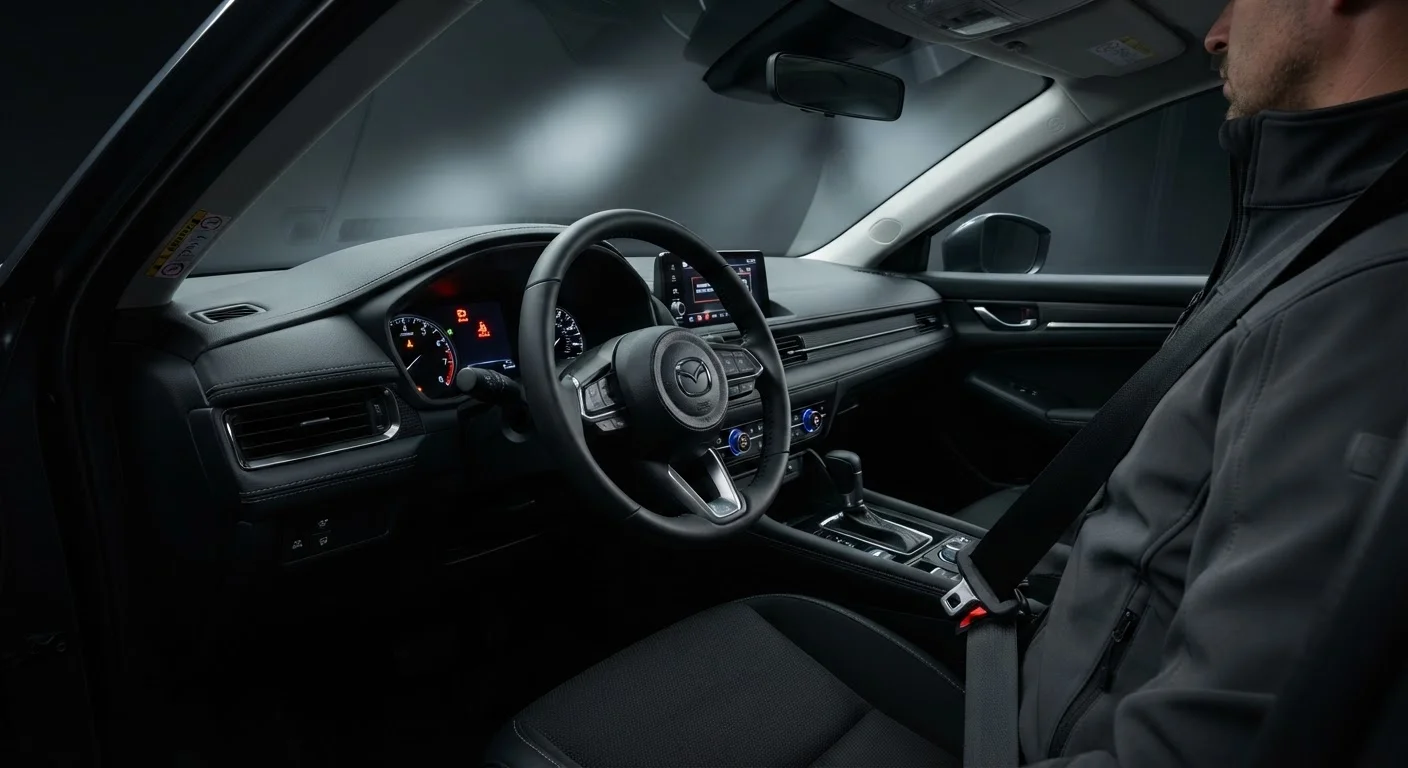
Photo credit: SmartReads.net | Simple Search, Relevant Results
In this article
ABS, airbags, lane assist — understand the difference between systems that prevent crashes and those that limit injury.
Key Takeaways
- Active systems work before a crash; passive systems work during and immediately after one.
- Both system types are complementary - neither alone provides complete protection.
- ABS, ESC, and lane-keeping assist are common active systems found in most modern vehicles.
- Seatbelts remain the single most effective passive safety device in any vehicle.
- Understanding these systems helps drivers use and maintain them more effectively.
- Federal regulations mandate several active and passive features in US vehicles sold today.
Two Layers, One Goal: Keeping You Safe
Every safety feature in your car falls into one of two categories: systems that try to prevent a crash, and systems that try to limit harm when a crash happens. The first group is called active safety systems; the second, passive safety systems. Most drivers benefit from both every trip without realizing it.
Understanding the difference isn't just trivia - it helps you appreciate what your vehicle can and can't do, and why keeping these systems in working order matters. Check your dashboard warning lights regularly; many warnings signal that an active safety system has gone offline.
| Criterion | Active Safety | Passive Safety |
|---|---|---|
| Primary purpose | Prevent a crash from occurring | Limit injury when crash occurs |
| When it activates | Before or during developing hazard | At moment of impact |
| Common examples | ABS, ESC, AEB, lane assist | Airbags, seatbelts, crumple zones |
| Driver interaction | Often intervenes without driver input | Fully automatic, no input needed |
| US federal mandate | ESC (2012), ABS (2013), AEB expanding | Seatbelts, frontal airbags long mandated |
| Maintenance sensitivity | High - sensors and software dependent | Moderate - physical components degrade or deplete |
Active Safety Systems: Prevention in Real Time
Active systems are always monitoring. They collect data from sensors, cameras, and radar and intervene - sometimes within milliseconds - when they detect a hazard developing.
- Anti-lock Braking System (ABS): Prevents wheel lockup during hard braking, allowing you to steer while stopping. Standard on all US passenger vehicles since 2013.
- Electronic Stability Control (ESC): Detects skids and selectively applies braking to individual wheels to help the driver maintain directional control. Federally mandated since 2012.
- Automatic Emergency Braking (AEB): Uses forward sensors to detect imminent collisions and applies brakes if the driver doesn't react in time. Increasingly standard across new models.
- Lane-Keeping Assist (LKA): Alerts or gently steers the vehicle back if it drifts from its lane without a turn signal - particularly relevant on highways.
- Blind Spot Monitoring: Alerts drivers to vehicles in adjacent lanes. Pair this with good mirror habits for fuller coverage, since no sensor system captures every scenario.
~10,000
Lives saved annually by ESC in the US
NHTSA estimates that electronic stability control prevents thousands of fatal crashes each year in the United States.
~45%
Fatal crash risk reduction from seatbelts
According to NHTSA data, wearing a seatbelt reduces the risk of death in a frontal crash by approximately 45% for car occupants.
30ms
Airbag deployment time
Frontal airbags typically fully inflate within about 30 milliseconds of a qualifying impact - faster than a human blink.
Active systems are not a substitute for attentive driving - they're a backup layer with real limits in adverse weather, unusual road markings, or sensor obstruction.
Passive Safety Systems: Built-In Damage Control
When a collision is unavoidable, passive systems take over. They don't require activation - they respond automatically to the forces of impact.
- Seatbelts: The single most proven occupant protection device. Pretensioners pull the belt tight at the moment of impact; load limiters then ease pressure to reduce chest injury. Federal law requires them in all seating positions.
- Airbags: Inflate in roughly 30 milliseconds to cushion occupants from the steering wheel, dashboard, and side structures. Modern vehicles carry multiple airbag types - frontal, side-curtain, and knee airbags - each calibrated to different impact directions.
- Crumple Zones: Sections of the vehicle's front and rear engineered to deform in a controlled way, absorbing and dispersing crash energy before it reaches the passenger compartment.
- Safety Cage / Cabin Structure: High-strength steel frames around the occupant compartment are designed to resist intrusion during rollovers and side impacts.
Child restraint systems are a critical subset of passive safety. Correct installation and appropriate seat selection are non-negotiable - see our child car seat safety overview for what regulations require and the reasoning behind them.
Seatbelts Activate Airbags Properly
Airbags are designed to work in conjunction with a fastened seatbelt - not as a substitute. An unbelted occupant can be seriously injured by an airbag deployment because the system assumes the occupant is held in position. Always buckle up before relying on any other passive system in the vehicle.
Why Both Systems Must Work Together
Neither category alone is sufficient. A vehicle loaded with passive safety gear but no ESC can still lose control on ice. Conversely, even the most sophisticated active systems can't eliminate every collision risk - sensor limitations, extreme conditions, and unpredictable events mean passive protection always matters.
The NHTSA and IIHS both evaluate vehicles across both dimensions - crash avoidance capability and crashworthiness - for exactly this reason. When shopping for or maintaining a vehicle, treat both categories as equally non-negotiable.
Maintenance plays a role too. A faulty wheel-speed sensor can disable ABS. A deployed airbag that isn't replaced offers no protection in a subsequent crash. And highway environments, where speeds amplify every risk factor, demand that both layers are fully functional - something worth reviewing alongside highway driving habits that quietly increase exposure.

Author
Autos Editorial Team
Autos Editorial Team is the collective byline for our editorial team and contributor network. Articles published under this byline or an editorial pen name are researched, written, and reviewed according to our editorial standards for clarity, consistency, and independence before publication.
View all articles →