
What 'Sustainable' Actually Means on a Product Label
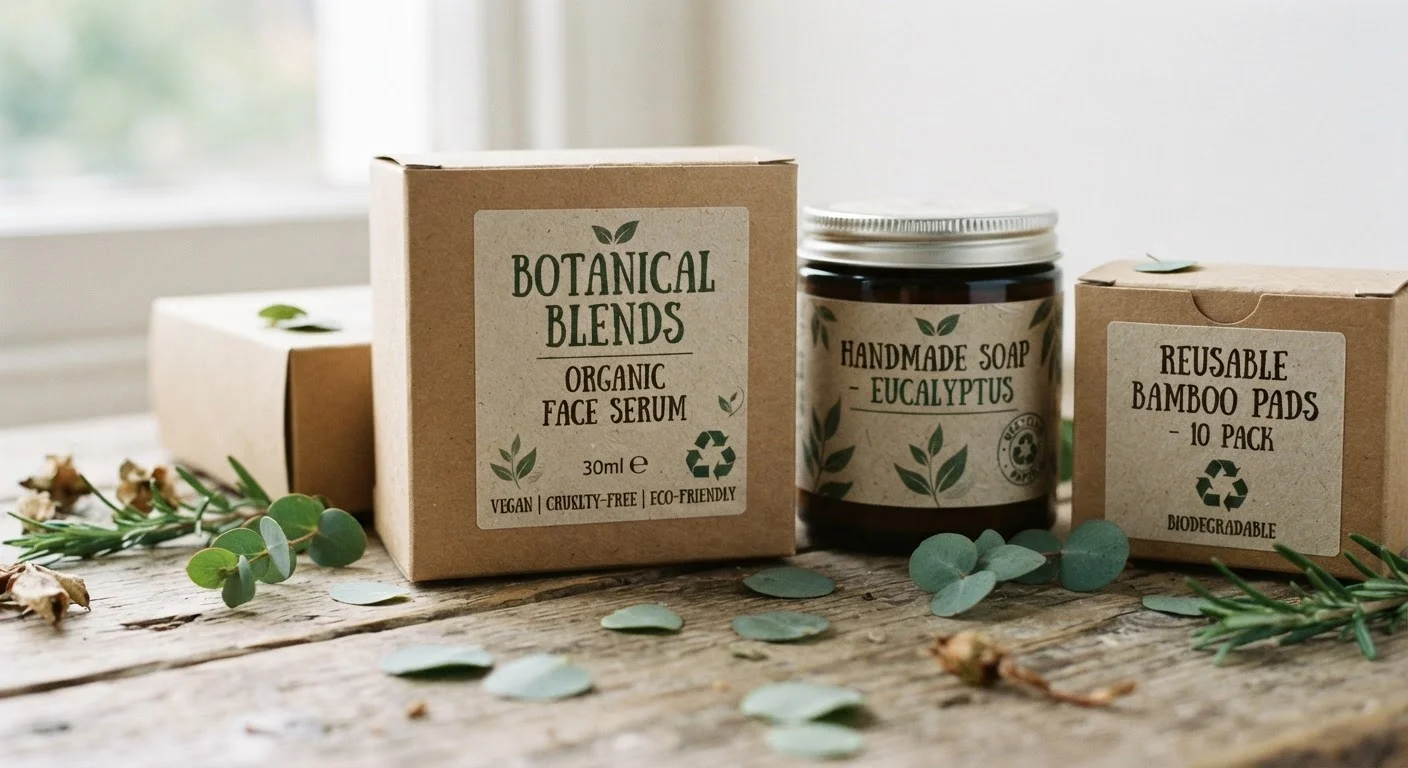
Photo credit: SmartReads.net | Simple Search, Relevant Results
In this article
Eco-friendly, green, carbon-neutral — these terms aren't interchangeable. Here's what they genuinely signal and what they quietly leave out.
Key Takeaways
- Most sustainability terms on labels are self-reported and legally unregulated beyond baseline FTC deception rules.
- Third-party certifications carry more weight than general claims because they require independent verification.
- "Carbon-neutral" and "net zero" are different commitments - the distinction matters.
- No label captures the full environmental picture of a product's lifecycle.
- Asking who verified a claim is the fastest shortcut for busy shoppers.
Why the Language Is Deliberately Vague
Walk any store aisle and you'll see packaging covered in leaf icons, earth tones, and words like sustainable, responsible, and conscious. The visual language is consistent; the underlying commitments are not.
Unlike nutrition facts or drug labeling, most environmental claims in the US are not pre-approved by a government agency. The FTC's Green Guides establish guardrails against deceptive claims - for instance, a product can't be called "recyclable" if it can only be recycled in facilities that serve fewer than 60% of US communities without a qualifying disclosure. But the Guides don't assign definitions to terms like "sustainable" or "green," leaving significant room for interpretation.
The practical result: two products sitting on the same shelf, both labeled sustainable, may have been manufactured under entirely different standards - or none at all.
FTC Green Guides: What They Cover
The FTC's Green Guides (last updated in 2012, with a review process ongoing as of the mid-2020s) set rules for environmental marketing claims in the US. They cover general claims, recyclable, recycled content, ozone-safe, and a handful of other terms. They do not cover terms like "sustainable" or "responsible" directly, and they do not require pre-approval of any claim before it appears on a label.
A Field Guide to the Most Common Terms
Understanding what specific words typically signal - and what they leave out - is the most efficient way to shop more intentionally.
- Eco-friendly / Green: Broad, self-reported, and unverified unless paired with a third-party certification. Treat these as an invitation to investigate further, not a conclusion.
- Natural: Describes ingredient source, not environmental impact. Natural ingredients can still require intensive land use, water, or chemicals during processing.
- Carbon-neutral: Usually means a company has offset its emissions - often by purchasing carbon credits - to reach a net of zero CO₂. The quality of offsets varies enormously. Some represent genuine emissions reductions; others are criticized for being unreliable.
- Net zero: A stricter claim that ideally means deep reductions across a full value chain, not just offset purchasing. Look for a named framework (such as the Science Based Targets initiative) to give the claim credibility.
- Biodegradable: Only meaningful with context. Most materials biodegrade eventually - the relevant questions are: under what conditions, and how quickly?
- Recyclable: Means the material can be recycled somewhere, not that your local program will accept it.
For a fuller glossary of material-specific terms like recycled, upcycled, and deadstock, see our plain-language glossary for conscious shoppers.
42%
Online green claims found potentially misleading
A 2021 European Commission sweep of online product claims found that approximately 42% could not be substantiated or were outright false, illustrating how widespread vague sustainability marketing has become.
~60%
US households with limited recycling access
The FTC's recyclability threshold acknowledges that items labeled recyclable must disclose limitations if fewer than 60% of US consumers have access to facilities that accept the material.
What Third-Party Certifications Actually Do
Certifications are the most reliable signal available to shoppers because they require an outside organization to audit and verify a company's claims. But not all certifications are equal - they vary by scope, rigor, and what part of the supply chain they cover.
A useful mental model: ask what the certification actually measures. Some focus narrowly on one input (organic fiber content, for example) while saying nothing about water use, labor practices, or packaging. Others attempt a lifecycle assessment across multiple impact areas.
Key questions to apply to any certification mark:
- Is the certifying body independent of the company being certified?
- Are the standards publicly available?
- Is re-certification required at regular intervals?
- Does it cover the supply chain or only the final product?
Shortcut for Time-Pressed Shoppers
Search the certifying body's name - not just the logo. Reputable programs maintain public databases where you can verify whether a specific company or product is currently certified. If a logo on packaging doesn't appear in the certifier's database, treat the claim with skepticism.
Even strong certifications represent a snapshot, not a complete picture. A product certified for organic materials may still ship in non-recyclable packaging. Weigh certifications as meaningful evidence, not proof of total environmental integrity.
The Limits No Label Will Tell You
Every sustainability label captures one dimension of a product's impact - rarely the whole lifecycle. Manufacturing emissions, transportation, retail operations, consumer use, and end-of-life disposal all contribute to a product's actual environmental footprint, and virtually no label accounts for all of them.
This is also why comparisons are tricky. A secondhand item with no eco-label may have a lower total footprint than a newly produced item bearing multiple certifications. That trade-off is worth thinking through. Our piece on secondhand vs. newly produced sustainable goods works through the real environmental considerations on both sides.
The bigger risk is when labels are deliberately misleading - selectively highlighting one green attribute while obscuring more significant harms elsewhere. That practice has a name: greenwashing. Understanding how to recognize it is the next logical step after learning to decode labels. Our piece on greenwashing and brand claims breaks down the telltale patterns.
Frequently Asked Questions

Author
Shopping Editorial Team
Shopping Editorial Team is the collective byline for our editorial team and contributor network. Articles published under this byline or an editorial pen name are researched, written, and reviewed according to our editorial standards for clarity, consistency, and independence before publication.
View all articles →