
Recycled, Upcycled, and Deadstock: A Plain-Language Glossary for Conscious Shoppers
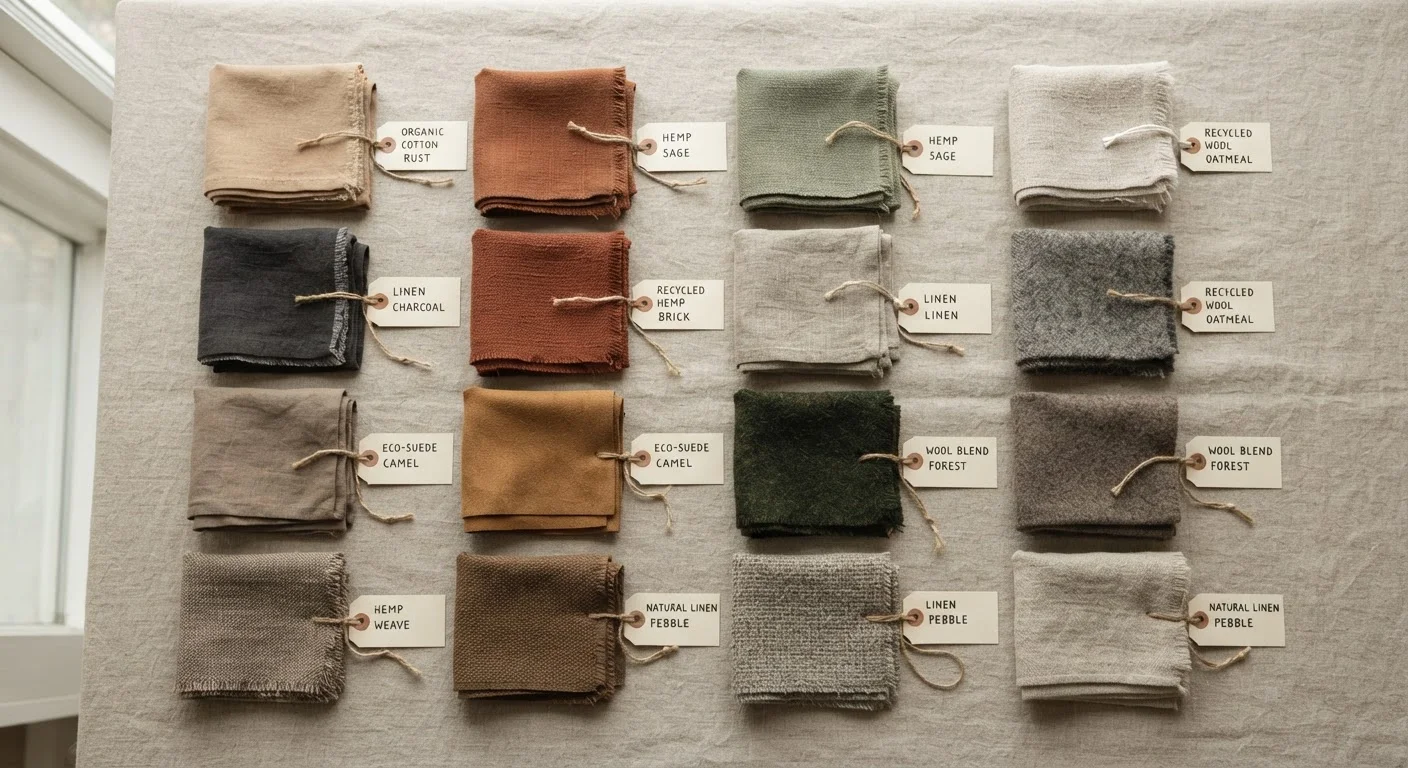
Photo credit: SmartReads.net | Simple Search, Relevant Results
A quick-reference guide to the terminology you'll encounter when shopping sustainably — demystified in plain, jargon-free language.
Why the Vocabulary Matters
Sustainable shopping labels have multiplied faster than their definitions have been standardized. Walk through any retail site today and you'll encounter terms like recycled content, upcycled, deadstock, and bio-based - sometimes on the same product. Without a working understanding of what each term actually signals, it's difficult to know whether a label reflects a meaningful environmental benefit or clever marketing.
This glossary cuts through that confusion. It's designed as a quick lookup reference - not a deep academic study - for busy shoppers who want to make more informed decisions without spending hours researching every purchase. For a closer look at how these terms appear on real product labels, see what those labels actually signal.
Recycled Content
Material that has been collected after use - either post-consumer (e.g., plastic bottles, old garments) or post-industrial (manufacturing offcuts) - and reprocessed into new raw material. The percentage of recycled content in a product is often disclosed on the label, though disclosure standards vary by brand.
Post-Consumer Recycled (PCR)
A subset of recycled content specifically sourced from items that consumers have already used and discarded - such as bottles, packaging, or textiles. PCR is generally considered higher-impact than post-industrial recycled material because it diverts waste from landfills.
Upcycled
The process of converting discarded materials or products into something of higher perceived value or quality without breaking them down into raw materials first. Upcycling preserves the material's existing form to some degree, distinguishing it from conventional recycling.
Deadstock
Surplus fabric or finished goods that were overproduced or unsold by manufacturers and retailers. Using deadstock prevents material from being discarded, though it doesn't reduce the original production footprint - it only addresses what's already been made.
Virgin Material
Raw material extracted or harvested for the first time that has not been previously processed or recycled. Virgin materials often carry a higher resource and energy cost compared to reclaimed or recycled alternatives.
Reclaimed Material
Material salvaged from existing structures, products, or environments - such as reclaimed wood from demolished buildings or ocean-recovered plastic - and repurposed with minimal reprocessing. Often used interchangeably with 'salvaged.'
Bio-based
Derived from biological sources such as plants, algae, or agricultural byproducts rather than petroleum. Bio-based does not automatically mean biodegradable or sustainably sourced; the full supply chain context matters for evaluating the actual environmental benefit.
Biodegradable
Capable of breaking down naturally through microbial activity over time. The term is meaningful only with context about conditions (e.g., industrial composting vs. home composting vs. landfill) and timeframe, as these vary enormously.
Circular Economy
A production and consumption model designed to eliminate waste by keeping materials in use for as long as possible through reuse, repair, remanufacturing, and recycling. It contrasts with the traditional linear 'take-make-dispose' model.
Closed-loop Recycling
A recycling process in which a material is recycled back into the same product type indefinitely without significant quality loss. Aluminum is a common example. It contrasts with open-loop recycling, where material is downcycled into a different, often lower-quality product.
Downcycling
Recycling a material into a product of lower quality or functionality than the original. Plastic bottles recycled into fleece fabric are a common example. The process still diverts material from landfill, but the material cannot be recycled into the same product again.
Bluesign / GRS Certified
Third-party certification standards that verify responsible use of resources and recycled content in textile manufacturing. Bluesign focuses on chemical safety and resource efficiency; the Global Recycled Standard (GRS) verifies recycled content claims across supply chains.
Material and Production Terms, Defined
The terms below appear most frequently across apparel, home goods, and personal care products. Understanding the distinctions between them - particularly recycled versus upcycled, or virgin versus reclaimed - helps you evaluate whether a product's environmental story is substantive.
| Post-consumer vs. post-industrial recycled | Post-consumer comes from used goods; post-industrial comes from manufacturing waste |
| Deadstock limitation | Prevents disposal of overstock - does not reduce original production impact |
| Bio-based ≠ biodegradable | These are distinct claims; a product can be one without being the other |
| U.S. label regulation | No single federal definition governs most sustainability terms in retail (FTC Green Guides provide guidance but not enforceable definitions for all terms) |
| Upcycling vs. recycling | Upcycling preserves the material's form; recycling breaks it down into raw material |
| Closed-loop example | Aluminum can be recycled back into aluminum cans repeatedly without quality loss |
One practical note: many of these terms lack a single regulatory definition in the U.S. market, which means they can be applied inconsistently. Pairing your label reading with third-party certifications (such as the Global Recycled Standard or OEKO-TEX) adds a meaningful layer of verification. If you want to go further, a structured pre-purchase checklist can help you apply these definitions at the point of decision.
Understanding these terms is a starting point, not a finish line. Greenwashing - the gap between claims and actual practices is common enough that even well-intentioned shoppers benefit from a degree of healthy skepticism. And if you want to build these habits into your regular routine, low-friction sustainable shopping strategies offer a practical path forward.
The FTC Green Guides: A Useful Reference Point
The U.S. Federal Trade Commission publishes guidance called the Green Guides, which outline how environmental marketing claims should be substantiated to avoid misleading consumers. While not every term in this glossary falls under a specific Green Guides rule, they represent the primary federal framework for evaluating eco-label accuracy. Shoppers and journalists alike can consult these guides at ftc.gov for context when evaluating specific claims.

Author
Shopping Editorial Team
Shopping Editorial Team is the collective byline for our editorial team and contributor network. Articles published under this byline or an editorial pen name are researched, written, and reviewed according to our editorial standards for clarity, consistency, and independence before publication.
View all articles →