
Greenwashing: The Gap Between a Brand's Claims and Its Practices
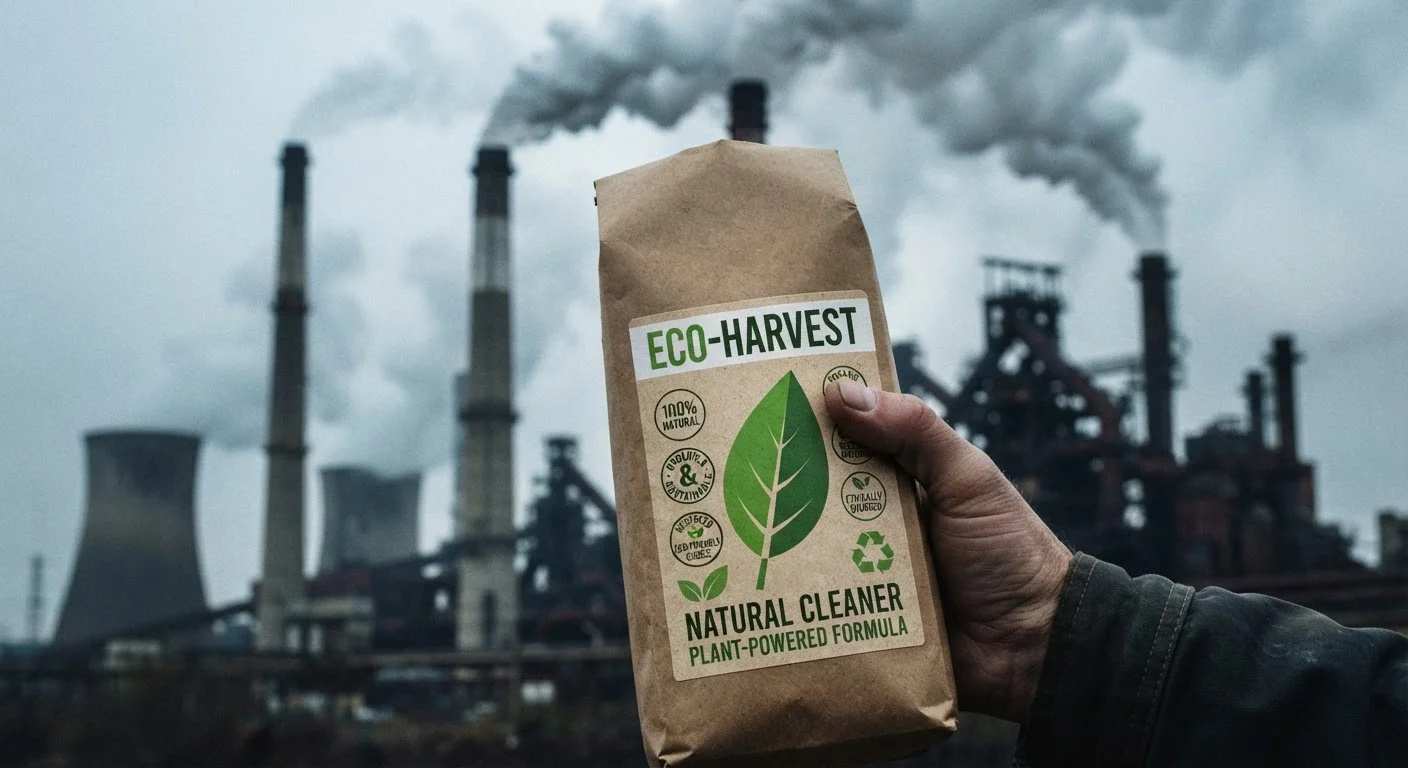
Photo credit: SmartReads.net | Simple Search, Relevant Results
In this article
Many products marketed as eco-friendly aren't as clean as they appear. Learn the telltale signs of greenwashing and how to see past the marketing.
Key Takeaways
- Vague terms like 'natural' and 'green' have no regulated legal definition in the US.
- Greenwashing is a marketing strategy, not always an intentional deception - but the effect is the same.
- Third-party certifications are among the most reliable signals of genuine environmental claims.
- A single sustainable ingredient does not make an entire product or company eco-friendly.
- The FTC's Green Guides set voluntary standards brands should follow for environmental marketing claims.
Why Greenwashing Is So Easy to Miss
Greenwashing thrives on the assumption that most shoppers don't have time to scrutinize every label - and for busy professionals, that assumption is often correct. Brands use green imagery, nature-inspired color palettes, and aspirational language to trigger a perception of environmental responsibility without necessarily earning it. This isn't always a calculated deception; sometimes marketing teams genuinely believe their claims are accurate, and sometimes regulatory ambiguity makes the line genuinely blurry. But the practical effect on consumers is the same: purchasing decisions are made on incomplete or misleading information.
The FTC's Green Guides - last updated in 2012, with a revision process underway - establish voluntary guidance on how environmental claims should be substantiated and qualified. The core standard is that claims should not be deceptive, should be specific rather than vague, and should be supported by competent evidence. But because these are guidelines rather than enforced regulations for most product categories, the burden of scrutiny still falls heavily on the shopper.
Myth
If a product says 'natural' or 'eco-friendly' on the label, it must meet some official environmental standard.
Fact
In the US, neither 'natural' nor 'eco-friendly' is legally regulated for most consumer products, so brands can use these terms without meeting any defined criteria.
Unlike organic food certification managed by the USDA, terms like 'natural,' 'green,' and 'eco-friendly' carry no mandatory definition for most product categories. The Federal Trade Commission's Green Guides discourage unqualified broad claims, but violations are handled case-by-case rather than through a certification gate. That gap lets almost any brand use these phrases with minimal accountability. When you see these words, treat them as a prompt to dig deeper - not as a guarantee.
Myth
A recyclable label means the product will actually be recycled after use.
Fact
Recyclability depends on local infrastructure. A product marked recyclable may go to landfill if your municipality's facilities can't process that material.
The recycling symbol on packaging signals theoretical recyclability, not guaranteed outcome. According to the EPA, less than a third of US municipal solid waste was recycled or composted in recent years. Many plastics labeled #3 through #7 are accepted by fewer than 30% of US curbside programs. A brand earns its 'recyclable' claim under the FTC's guidance only if a substantial majority of consumers have access to the infrastructure to actually recycle it - a bar many labels quietly fail.
Myth
Brands that highlight one sustainable product line must operate sustainably across the board.
Fact
A single green product line does not reflect a company's overall environmental practices, supply chain labor standards, or emissions footprint.
This tactic - promoting a narrow eco-friendly offering while the broader business operates conventionally - is one of the most common forms of greenwashing identified by researchers. It's sometimes called the 'hidden trade-off' pattern: one attribute (say, recycled packaging) is spotlighted while other significant impacts (manufacturing emissions, water usage, supplier practices) go unmentioned. A brand genuinely committed to sustainability typically publishes a full sustainability report, not just a product-level claim.
Myth
Carbon-neutral claims mean a company has eliminated its carbon emissions.
Fact
'Carbon neutral' usually means emissions are offset, not eliminated - and the quality of offsets varies enormously.
'Carbon neutral' indicates that a company calculates its emissions and purchases credits (such as forest conservation or renewable energy projects) to balance them out. This is not the same as reducing emissions at the source. The integrity of offset programs varies widely: some projects deliver genuine, measurable carbon reductions, while others have faced credibility challenges. Look for claims backed by recognized standards such as the Gold Standard or Verified Carbon Standard, and check whether the company is also actively reducing its own operational footprint over time. For a deeper look at what these environmental label terms actually signal, see what 'sustainable' actually means on a product label.
Myth
Third-party certifications are all equally rigorous and trustworthy.
Fact
Certification programs differ significantly in their standards, scope, and verification requirements - some are far more rigorous than others.
Not all eco-labels are created equal. Some certifications require on-site audits, supply chain traceability, and annual renewal reviews. Others amount to self-reported questionnaires with minimal third-party oversight. When evaluating a certification, consider who issues it, what criteria it measures, whether audits are conducted by independent parties, and how transparent the certification body is about its methodology. Reputable examples in the US include ENERGY STAR (EPA-administered), USDA Organic, and B Corp certification - each with distinct scope and verification processes.
Patterns That Signal a Problem
Researchers and consumer advocates have identified several recurring patterns in greenwashing. Knowing these patterns lets you spot red flags quickly - without needing a background in environmental science.
42%
Of green claims found potentially misleading
A 2021 European Commission sweep of green claims found that 42% could not be substantiated or were outright false, highlighting how widespread the issue is across consumer markets.
~30%
Of US plastic actually recycled
EPA data consistently show that less than a third of US municipal solid waste is recycled or composted, undermining many product-level recyclability claims.
- Vague or fluffy language: Claims like 'environmentally conscious' or 'committed to the planet' with no supporting data or third-party validation.
- Irrelevant claims: Highlighting the absence of something that's already prohibited, like advertising a product as 'CFC-free' when CFCs have been banned for decades.
- Hidden trade-offs: Emphasizing one positive attribute while omitting significant negative impacts elsewhere in the product lifecycle.
- No verifiable evidence: Certification logos that aren't clickable or traceable to a real certifying body, or claims with no referenced study or standard.
For shoppers who want a practical framework for evaluating these signals at the point of purchase, the eco-conscious shopping audit offers a structured set of questions to work through before committing to a buy.
Self-Issued Certifications Are a Red Flag
Some brands display certification-style seals they created internally or through industry groups they fund. Before trusting a logo, search for the certifying body independently and confirm it operates at arm's length from the companies it evaluates. If no credible third-party certifier can be identified, treat the claim as unverified marketing.
What Genuine Sustainability Signals Look Like
Authentic environmental responsibility tends to look different from greenwashing in a few consistent ways. Brands with substantive commitments generally publish detailed sustainability reports with measurable goals and progress tracking. They hold certifications from recognized, independently audited programs. They acknowledge trade-offs rather than claiming perfection. And their sustainability communications cover the full supply chain, not just packaging or a single ingredient.
Understanding the terminology used in these communications is also essential. Terms like 'recycled,' 'upcycled,' and 'deadstock' carry specific meanings that affect how environmentally significant a claim actually is. The plain-language glossary for conscious shoppers breaks down what these terms genuinely mean in practice. Similarly, secondhand purchasing is sometimes assumed to be automatically the greener option - though the reality involves more nuance, as explored in this look at secondhand vs. newly produced sustainable goods.
Scrutinize Carbon-Neutral Claims Carefully
A carbon-neutral label does not mean a company has reduced its emissions - it often means emissions were offset through purchased credits. Offset program quality varies significantly, and some projects have faced serious credibility challenges. Always check which offset standard backs the claim and whether the company publicly reports its own emissions trajectory over time.
Eco-conscious shopping doesn't require perfection. It does require a habit of asking one additional question before accepting a green claim at face value: What's the evidence?

Author
Shopping Editorial Team
Shopping Editorial Team is the collective byline for our editorial team and contributor network. Articles published under this byline or an editorial pen name are researched, written, and reviewed according to our editorial standards for clarity, consistency, and independence before publication.
View all articles →