
Your Hair Type, Decoded
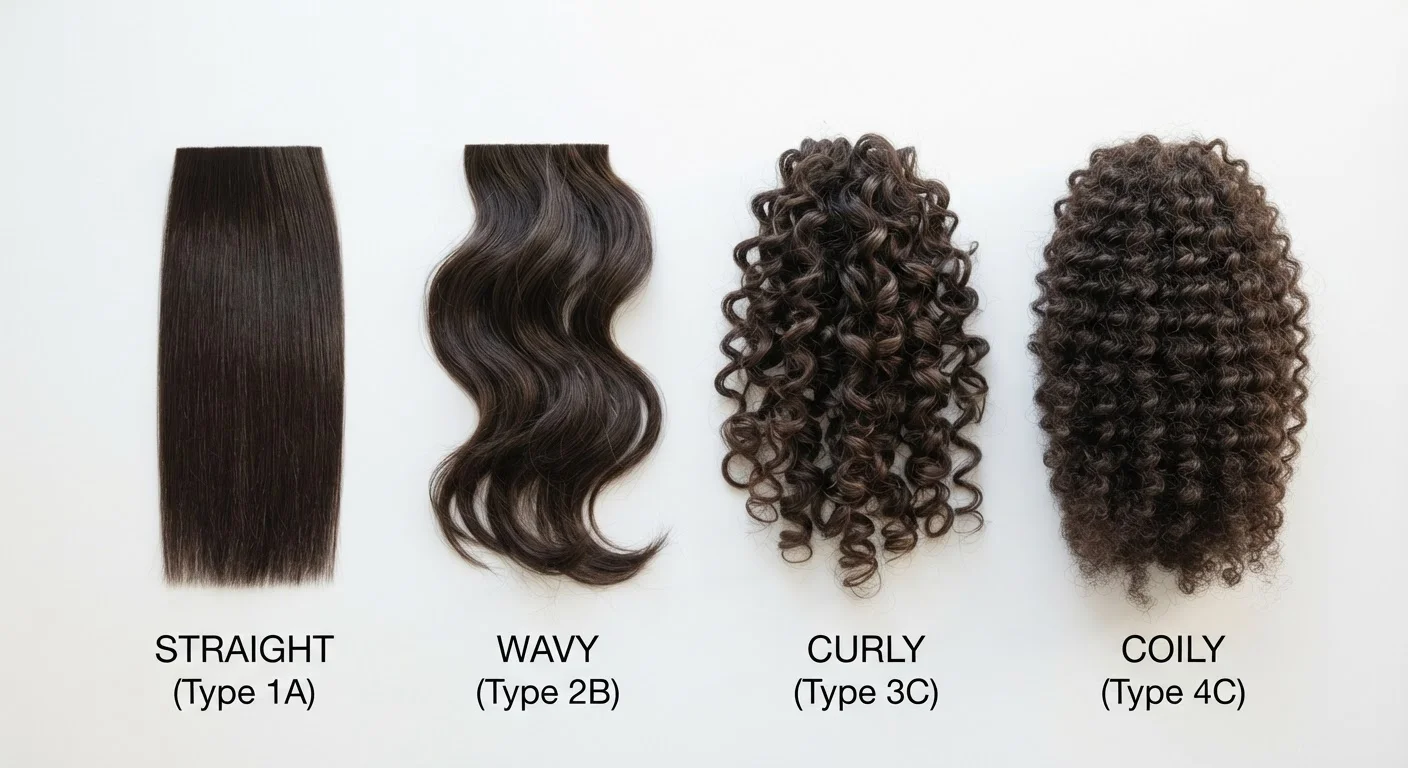
Photo credit: SmartReads.net | Simple Search, Relevant Results
In this article
Curl patterns, porosity, density — understand what your hair type actually means and why it shapes every care decision you make.
Key Takeaways
- Curl pattern alone is insufficient - porosity and density must also guide your routine.
- High-porosity hair absorbs moisture quickly but loses it just as fast, requiring sealing steps.
- Low-density hair is easily weighed down by heavy products regardless of curl type.
- Strand width determines how much protein your hair can tolerate before it becomes brittle.
- Understanding your hair type cuts decision fatigue when choosing routines and products.
The Four Dimensions You Actually Need to Know
Most hair-type conversations begin and end with curl pattern - the familiar straight-to-coily spectrum. That's a useful starting point, but it leaves out three dimensions that may matter more to your daily routine: porosity, density, and strand width. Missing any one of these explains why a highly recommended routine can feel completely wrong on your hair.
Curl pattern describes the shape of the hair shaft from root to tip. A widely used classification runs from Type 1 (straight) through Type 2 (wavy) to Type 3 (curly) and Type 4 (coily), with subcategories A, B, and C reflecting increasing tightness within each group. It influences how easily sebum travels from scalp to ends, how prone hair is to tangling, and how it responds to humidity.
Porosity refers to the hair cuticle's ability to absorb and hold moisture. High-porosity hair - whether naturally so or made that way by chemical or heat damage - drinks in moisture readily but releases it just as fast, leaving strands prone to dryness and frizz. Low-porosity hair repels water initially but, once hydrated, retains it well. Medium porosity sits in a cooperative middle ground. Heat styling raises porosity over time, which is worth knowing before reaching for a flat iron daily.
Density is the number of strands on your scalp - loosely categorized as low, medium, or high. It's distinct from strand width: you can have thick individual strands but relatively few of them, or many fine strands creating the appearance of fullness. Density determines how much product your hair can support before it looks weighed down or greasy.
Strand width (fine, medium, coarse) reflects the diameter of individual hairs. Fine strands have a smaller cortex and are more vulnerable to protein overload - too many protein-heavy treatments leave them stiff and snapping. Coarser strands can generally tolerate, and often benefit from, heavier conditioning.
~100,000
Average number of hair strands on a human scalp
Estimates from trichological research suggest the typical scalp carries between 80,000 and 120,000 strands, with natural variation across individuals.
3-4
Cuticle layers in a healthy hair strand
Healthy hair cuticles typically have three to four overlapping layers; chemical or heat damage can reduce this, directly increasing porosity.
Why Porosity Is the Practical Game-Changer
Of the four dimensions, porosity tends to have the most immediate, visible impact on how a routine performs - yet it's the least intuitive concept for most people. Understanding it shifts your approach from guesswork to logic.
With high porosity, the cuticle layer sits open or is structurally uneven. Water enters fast, which sounds advantageous, but it exits just as fast. The practical response: prioritize sealing steps after applying moisture - products that create a physical barrier over the strand's surface help lock hydration in. Leave-in conditioners layered with heavier finishing products generally perform well here.
With low porosity, a tightly closed cuticle resists moisture entry. The fix isn't more product - it's warmth. Gentle heat during conditioning (even sitting under a warm towel) lifts the cuticle enough to allow absorption. Lighter, water-based products work better than dense creams, which simply sit on top and cause buildup.
Low Porosity? Use Warmth, Not More Product
If your hair feels perpetually under-conditioned despite generous product use, porosity - not product quality - is likely the issue. Applying conditioner to hair covered with a warm, damp towel for 10-15 minutes allows the cuticle to lift slightly and absorb more effectively. This single adjustment often resolves stubborn dryness without changing anything else in your routine.
Porosity isn't fixed forever. Chemical processes - coloring, relaxing, keratin treatments - reliably shift hair toward higher porosity. Scalp health also plays a role: an imbalanced scalp environment can affect how strands emerge and develop over time. Reassessing your porosity after any major chemical or health change is a worthwhile habit.
Putting It Together: Reading Your Hair as a System
Hair type works as a system, not a checklist. A person with Type 3B curls, low density, and low porosity needs an entirely different approach than someone with the same curl pattern but high density and high porosity - even though their curl shape looks similar in a photo.
The practical sequence: identify your curl pattern to understand structural tendencies (tangling, shrinkage, frizz susceptibility). Assess porosity to determine how your routine should deliver and seal moisture. Factor in density and strand width to calibrate how heavy your products can be without weighing hair down or causing buildup.
Once you understand these variables, reading product ingredient lists becomes genuinely useful rather than overwhelming. Humectants draw moisture in - helpful for most hair but potentially problematic in very low-humidity environments. Proteins reinforce the cortex - beneficial for high-porosity or fine hair in measured doses, potentially over-stiffening for coarse strands. Context, grounded in your hair's actual properties, determines the right call.
The goal is a shorter, more confident decision path. Rather than trialing every product promising to suit your curl type, you can filter by what your hair's structure actually needs. That's the value of decoding your hair type properly - not to fit into a category, but to stop wasting time on routines built for someone else's hair.
This article is for informational and educational purposes only. Individual results vary; consult a licensed cosmetologist or trichologist for personalized hair care recommendations, especially if you are experiencing hair loss or scalp concerns.
Frequently Asked Questions

Author
Beauty Editorial Team
Beauty Editorial Team is the collective byline for our editorial team and contributor network. Articles published under this byline or an editorial pen name are researched, written, and reviewed according to our editorial standards for clarity, consistency, and independence before publication.
View all articles →