
A Five-Minute Morning Routine for Hair That Stays Manageable All Day
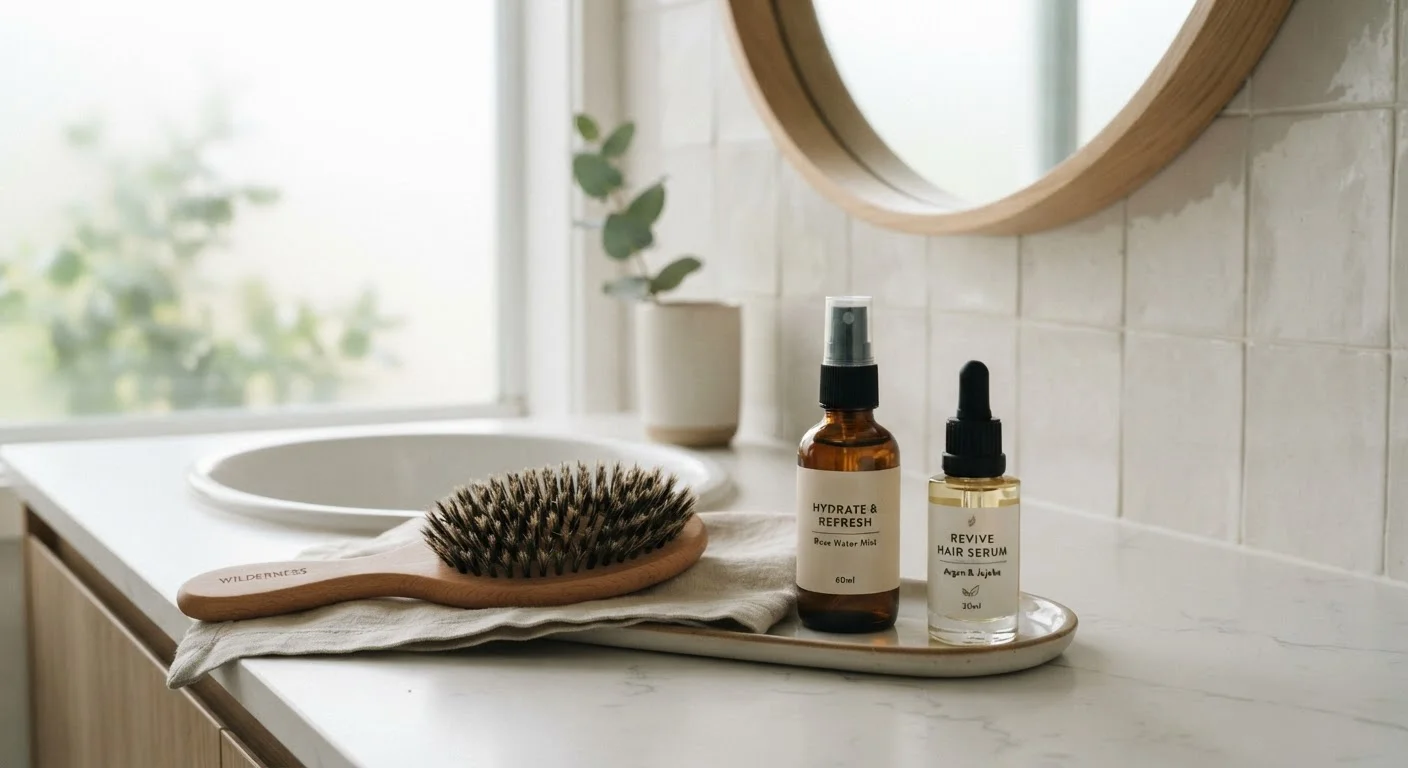
Photo credit: SmartReads.net | Simple Search, Relevant Results
In this article
Practical steps busy professionals can follow each morning to keep hair neat, hydrated, and under control without a lengthy routine.
Key Takeaways
- Five minutes is enough time to achieve manageable, professional-looking hair when each step is intentional.
- Moisture and light hold are the two pillars of an effective low-maintenance morning hair routine.
- Scalp health directly affects how cooperative your hair is each morning - it cannot be ignored.
- Overnight preparation reduces frizz and detangling time before your routine even begins.
- Fewer, well-chosen products consistently outperform a cluttered, complicated shelf.
Why a Structured Five-Minute Routine Outperforms an Ad Hoc Approach
Most professionals don't lack motivation when it comes to hair care - they lack a repeatable system. Without a clear sequence, mornings become a series of improvised decisions: which product, which tool, how much time. That improvisation is what makes getting ready feel longer and less satisfying than it needs to be.
A structured routine eliminates decision fatigue. When every step has a defined purpose and a defined time budget, the entire process runs on near-autopilot. The underlying science supports this: hair behaves more predictably when it receives consistent moisture and handling rather than sporadic treatment. As noted in our guide to scalp health, the condition of your scalp directly influences hair texture, shine, and manageability at the surface level - making foundational care, not just surface styling, the real efficiency play.
What you will need
Before diving into the steps, gather your tools. Having everything within arm's reach at the start is itself a time-saving measure that most people underestimate.
Wide-Tooth Comb
Detangles hair gently from ends to roots, minimizing breakage regardless of hair type.
Lightweight Leave-In Conditioner or Detangling Spray
Restores moisture lost overnight and provides a slip that makes combing faster and less damaging.
Microfiber Towel
Absorbs excess water faster and with less friction than a standard terry towel, reducing frizz.
Light-Hold Finishing Product
Keeps hair in place throughout the day without buildup or stiffness.
Satin or Silk Pillowcase
Reduces friction while sleeping, arriving at morning with smoother, less tangled hair.
Making the Routine Stick - And What to Expect
A five-minute routine becomes automatic within two to three weeks of consistent practice. The first few days may feel slightly longer as you calibrate product amounts and refine your technique - that's normal and not a sign the approach doesn't work.
It's also worth addressing a common misconception: a shorter routine does not mean lower-quality results. Hair care myths that science has largely settled confirms that many time-intensive practices (extensive daily brushing, compulsive smoothing, heavy product layering) offer diminishing returns and can cause more harm than a streamlined approach. Efficiency and efficacy are not in conflict.
Assess and Refresh - Don't Default to Rewashing
Before reaching for shampoo, evaluate your hair's actual state. Overwashing strips the scalp of sebum - the natural oil that keeps hair supple - and can trigger compensatory oil production that makes hair greasier faster. If your hair isn't visibly oily at the roots or carrying product buildup, a targeted refresh will do the job in a fraction of the time. Use a small amount of leave-in conditioner or a few spritzes of water mixed with conditioner in a spray bottle to reactivate moisture and smooth the cuticle.
Detangle Methodically, Starting at the Ends
Working a wide-tooth comb or paddle brush through dry or damp hair from the ends upward toward the roots prevents the tearing and breakage that comes from starting at the scalp. This takes roughly 60 seconds when hair is already moisturized. If knots are a consistent morning problem, consider switching to a satin pillowcase overnight - the reduced friction keeps hair significantly smoother by morning. For those with tightly coiled or highly textured hair, detangling on slightly dampened, conditioned hair is generally less damaging than on fully dry strands.
Apply a Single Finishing Product - and Mean It
Product overload is the most common reason morning routines spiral out of control. Choose one finishing product matched to your goal: a light hold cream for definition, a smoothing serum for frizz, or a flexible-hold gel for structure. Apply it to damp or just-dried hair, distributing evenly through mid-lengths and ends. Resist the impulse to layer multiple products unless your hair type specifically requires it - buildup accelerates and future mornings become harder, not easier.
Style with a Purpose-Driven Shape
Rather than fighting your hair's natural texture each morning, work with it. If your hair has natural wave or curl, scrunch gently to encourage the pattern rather than disrupting it. If your hair is straight, a quick smooth-back or tuck behind the ears takes seconds and reads as intentionally polished. The goal is a shape that requires no mid-day correction - not a style that demands attention to maintain. For longer hair, a low ponytail, loose bun, or half-up style achieved in under a minute is often the most durable professional choice.
Lock In Longevity with a Light Finish
If your hair is styled and you want it to stay that way through a full workday, a very light pass of a flexible-hold spray - held at least 10-12 inches away - can extend longevity without stiffness. Alternatively, smoothing a tiny amount of serum over the surface of your style (without disturbing the shape) adds shine and tames any remaining flyaways. This final step should take no more than 30 seconds and mark the routine complete.
If you're also building out a broader morning routine, the same logic applies across categories. Our five-minute natural skincare ritual uses a parallel framework for skin - stacking the two routines back to back keeps total morning prep under 12 minutes for most people.
The Night-Before Advantage
Much of what makes mornings difficult with hair is created the night before. Sleeping without protecting your hair - especially if it's textured or chemically treated - creates friction-driven frizz and tangles that eat into your five-minute window. A satin pillowcase or a loose protective style (a low pineapple for curly hair, a loose braid for straight or wavy) takes 30 seconds at night and meaningfully reduces morning detangling time.

Author
Beauty Editorial Team
Beauty Editorial Team is the collective byline for our editorial team and contributor network. Articles published under this byline or an editorial pen name are researched, written, and reviewed according to our editorial standards for clarity, consistency, and independence before publication.
View all articles →