
Wearable Glossary: The Terms You'll Actually Encounter
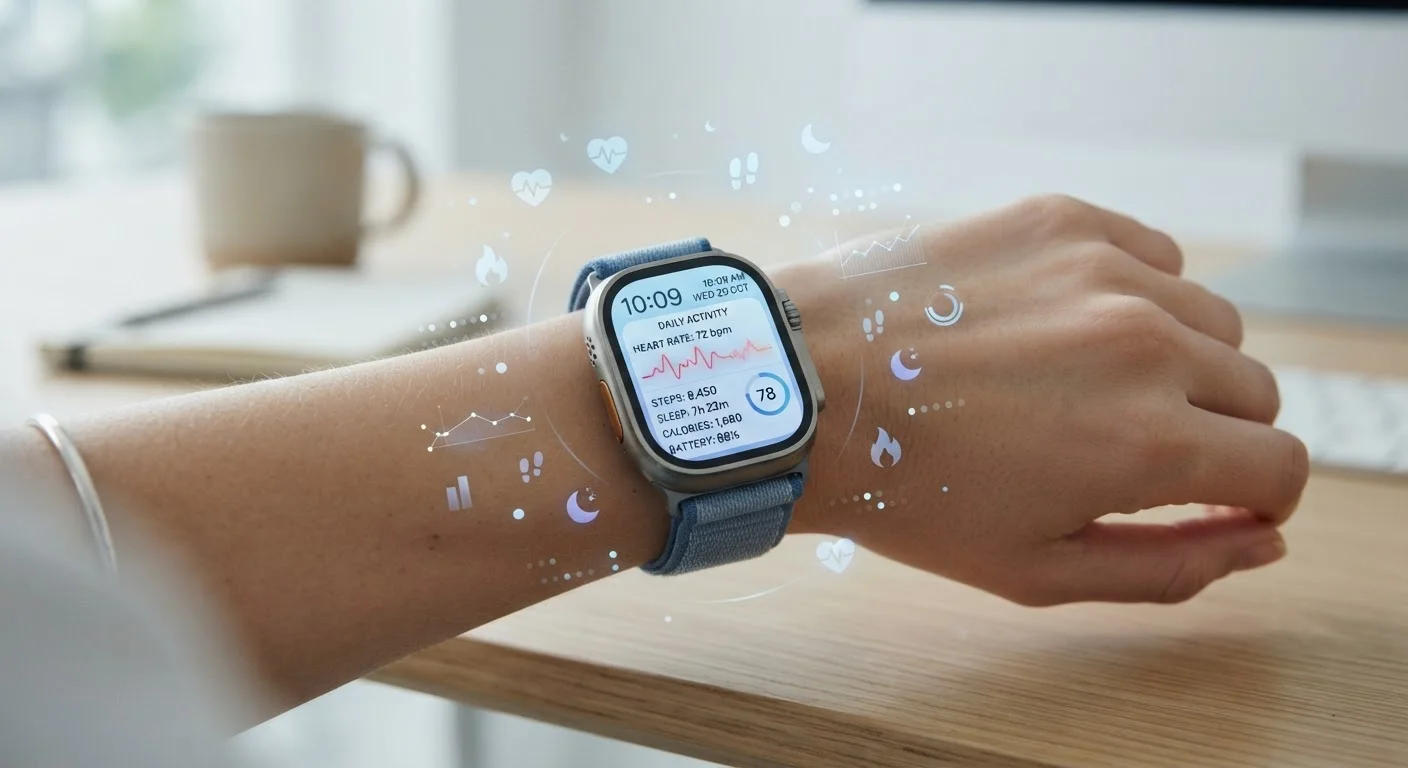
Photo credit: SmartReads.net | Simple Search, Relevant Results
In this article
A quick-reference guide to the most common wearable tech terms — from VO2 max and ECG to NFC payments and SDK — defined in plain language.
Why Wearable Jargon Matters
Wearable devices now surface a dense layer of acronyms, health metrics, and technical specifications - often without explanation. When your watch flags a low HRV or your fitness tracker prompts you to sync via NFC, it assumes you already know what those terms mean. Most of us don't, and that gap reduces the practical value of devices that are otherwise genuinely useful.
This glossary covers the terms you're most likely to encounter across health metrics, connectivity, hardware, and software - defined in plain language, without the marketing layer. For context on how these metrics are actually generated and what their limits are, see The Data Your Wearable Collects.
| Most common health metric | Resting Heart Rate (RHR) (Tracked by virtually all mainstream consumer wearables) |
| Standard water resistance rating | 5 ATM (50 meters) (Common baseline for swim-safe wearables) |
| ECG availability | Single-lead only on consumer devices (Clinical ECGs use 12 leads; wearable readings are limited in diagnostic scope) |
| NFC payment range | ~4 cm (under 2 inches) (Standard NFC operating distance for contactless transactions) |
| Typical sleep stage accuracy | Estimated, not clinical (Consumer wearable algorithms vs. polysomnography lab testing) |
The Full Glossary
Terms are grouped by category for easier scanning. Each definition reflects how the term is used in mainstream consumer wearables - not clinical or engineering contexts, which often carry different standards.
VO2 Max
A measure of the maximum rate at which your body can consume oxygen during intense exercise. Consumer wearables estimate this using heart rate and movement data - not a lab treadmill test - so figures are approximate but useful for tracking fitness trends over time.
HRV (Heart Rate Variability)
The variation in time between consecutive heartbeats, measured in milliseconds. Higher HRV is generally associated with better cardiovascular fitness and recovery. Wearables use it to generate readiness and stress scores, though individual baselines vary considerably.
SpO2
Blood oxygen saturation - the percentage of hemoglobin in your blood carrying oxygen. Consumer wearable SpO2 readings are estimates based on optical sensors and are not equivalent to clinical pulse oximeters. Readings below 95% warrant attention from a healthcare professional.
ECG / EKG
Electrocardiogram - a recording of the heart's electrical activity. Wearables with ECG capability use electrodes on the device casing to capture a single-lead reading when you press your finger against the watch. This can flag irregular rhythms like atrial fibrillation but is not a substitute for a clinical multi-lead ECG.
RHR (Resting Heart Rate)
Your heart rate measured during a period of minimal activity, typically during sleep. Wearables track RHR nightly. A rising trend over several days can indicate fatigue, illness, or overtraining - but a single elevated reading is rarely significant on its own.
Sleep Staging
The classification of sleep into phases - typically light, deep, and REM - based on movement and heart rate patterns. Consumer wearables use algorithms to estimate these stages; they are approximations, not clinical polysomnography readings.
NFC (Near Field Communication)
A short-range wireless protocol that enables contactless payments and data transfer when two NFC-enabled devices are held within a few centimeters of each other. Wearables with NFC can store payment credentials and tap to pay at compatible terminals.
ANT+
A wireless protocol designed specifically for fitness sensors - chest straps, cycling power meters, and similar equipment. A wearable that supports ANT+ can connect to a broader ecosystem of external sensors beyond Bluetooth-only devices.
Continuous Glucose Monitor (CGM)
A sensor - typically worn on the arm - that measures glucose levels in interstitial fluid continuously throughout the day. Some wearable platforms now integrate CGM data. CGMs used outside of a clinical or prescribed context provide trend data, not diagnostic readings.
GNSS / GPS
Global Navigation Satellite System - the broader category that includes GPS (US), Galileo (EU), GLONASS (Russia), and others. Wearables listed as 'multi-band GNSS' use signals from multiple systems simultaneously for more accurate location tracking, particularly in urban areas with tall buildings.
Ambient Light Sensor (ALS)
A sensor that detects surrounding light levels and automatically adjusts display brightness. This is a primary factor in managing battery life - higher brightness consumes significantly more power.
Always-On Display (AOD)
A screen mode that keeps a low-power version of the watch face visible at all times rather than activating only on wrist raise. Convenient for quick glances, but typically reduces battery life by 20-40% compared to standard raise-to-wake modes.
Connectivity & Platform Terms
SDK (Software Development Kit): A package of tools that lets third-party app developers build integrations with a wearable platform. When a wearable has an open SDK, it means more apps - health, productivity, navigation - can connect to it. A closed ecosystem, by contrast, limits integrations to first-party offerings.
OTA Update (Over-the-Air): Firmware or software delivered wirelessly to your device without plugging it into a computer. Most modern wearables patch security vulnerabilities and add features via OTA, which means keeping your device's Bluetooth connection active and periodically checking for pending updates matters for both performance and security.
Companion App: The smartphone application paired with your wearable. Raw sensor data is typically processed and stored in the companion app, which also handles notifications, settings, and data export. The quality of the companion app often determines how useful a device's data actually is.
Hardware Terms
PPG (Photoplethysmography): The optical sensing method used to measure heart rate and blood oxygen from the wrist. The sensor shines LED light into the skin and measures how much bounces back - blood absorbs more light when the heart pumps. Most consumer heart rate readings rely on PPG, which performs well at rest but can lose accuracy during vigorous movement.
IP Rating: A two-digit code (e.g., IP68) indicating resistance to solids and liquids. The first digit covers dust and debris; the second covers water. IP68 means the device can withstand submersion at depth under controlled conditions - but ratings are tested in still water, so swimming pool use may differ from tap water exposure.
If you're still weighing which type of wearable best fits your routine, Smartwatches, Fitness Trackers, and Smart Rings breaks down each category's strengths. And if you've heard bold claims about what wearables can detect, Wearable Tech Myths offers a grounded look at what the evidence actually supports.
Consumer Metrics Are Estimates, Not Diagnoses
Terms like SpO2, ECG, and sleep staging carry clinical weight in medical contexts - but consumer wearables operate under different standards than regulated medical devices. The data is useful for spotting personal trends over time, not for diagnosing conditions. Always consult a qualified healthcare professional if a reading concerns you.
This glossary provides general informational context only. Health metrics generated by consumer wearables are not medical measurements and should not be used to self-diagnose or replace professional medical evaluation.

Author
Technology Editorial Team
Technology Editorial Team is the collective byline for our editorial team and contributor network. Articles published under this byline or an editorial pen name are researched, written, and reviewed according to our editorial standards for clarity, consistency, and independence before publication.
View all articles →