
The Data Your Wearable Collects - and What It Can and Cannot Tell You
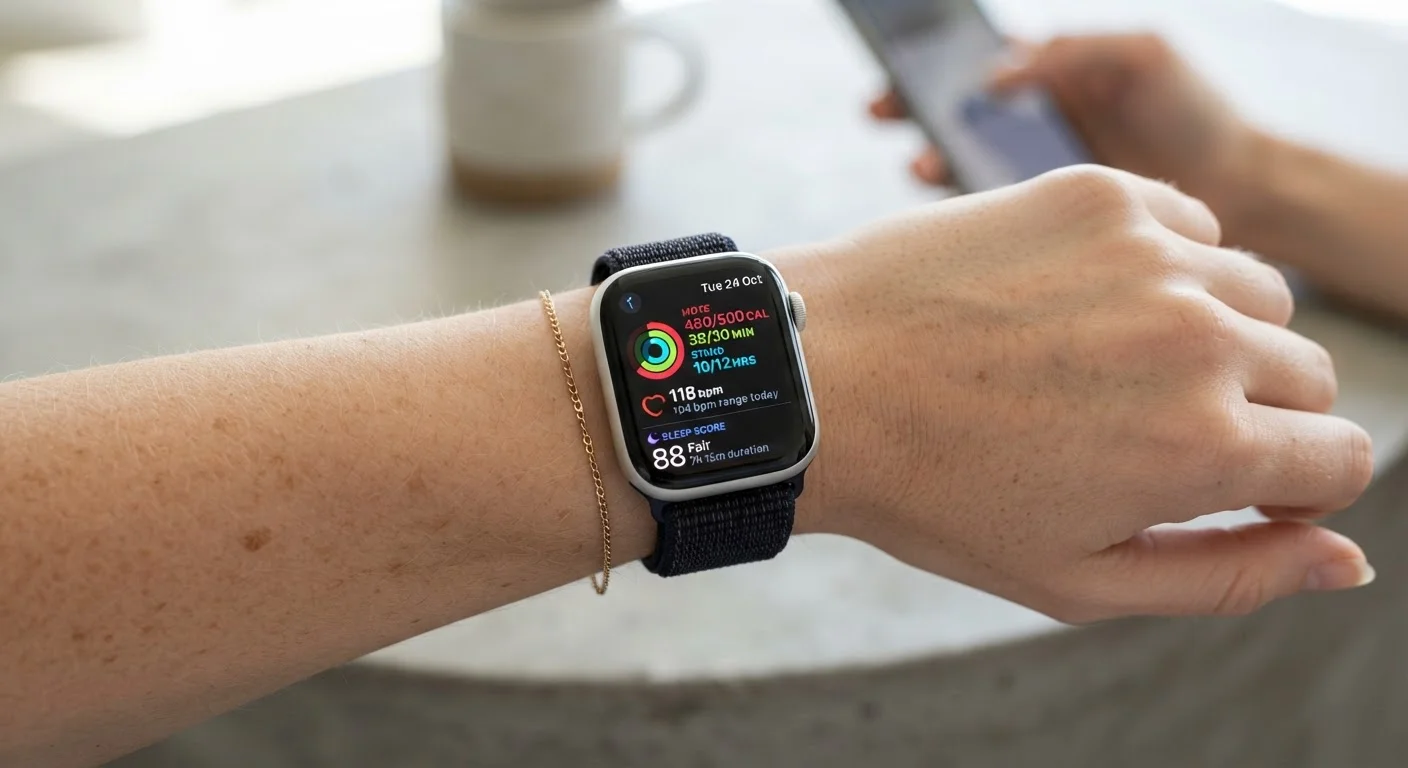
Photo credit: SmartReads.net | Simple Search, Relevant Results
In this article
Heart rate, HRV, SpO2, sleep stages — a plain-language breakdown of the metrics on your wrist and the real limits of consumer-grade sensors.
Key Takeaways
- Wearables measure biometric proxies, not direct clinical readings - context always matters.
- Heart rate and step count are among the most reliable metrics consumer sensors produce.
- SpO2 and HRV readings on wearables can be directionally useful but are not diagnostic tools.
- Sleep stage data is estimated from movement and heart rate, not verified brain-wave readings.
- Trends over time are more meaningful than any single data point your device displays.
- Always consult a healthcare professional before acting on health data from a consumer device.
The Metrics on Your Wrist, Explained
Most wearables track a common core of metrics, each with a different level of reliability. Here is what each one actually measures:
- Heart rate: Measured via optical PPG sensors that detect blood flow changes. Reliable at rest and during steady-state aerobic activity; less accurate during rapid movements or high-intensity intervals.
- Step count: Derived from an accelerometer. Generally dependable for walking, though it can overcount on bumpy rides or undercount activities like cycling.
- Heart rate variability (HRV): The interval between heartbeats, used as a proxy for recovery and autonomic nervous system state. Wearable HRV is most consistent when measured during sleep or controlled resting conditions.
- SpO2 (blood oxygen saturation): Estimated using red and infrared light absorption. Consumer accuracy varies and is influenced by skin tone, movement, and fit - it is an indicator, not a clinical measurement.
- Sleep stages: Estimated by combining movement data and heart rate patterns. Light, deep, and REM stages are algorithmic guesses, not verified readings. Useful for spotting broad trends, not for diagnosing sleep conditions.
- Skin temperature: A relative measure of surface temperature, useful for detecting deviations from your personal baseline rather than providing an absolute reading.
For plain-language definitions of these and other terms you will encounter, see the Wearable Glossary.
~2-3 bpm
Typical heart rate margin of error at rest
Independent validation studies generally find consumer optical sensors accurate within 2-3 beats per minute during resting and moderate activity conditions.
~80%
Wearable sleep stage classification accuracy
Research comparing consumer wearables to polysomnography finds sleep stage classification accuracy typically ranging from roughly 70-85%, depending on the device and methodology.
Up to 30%
Potential calorie burn estimation error
Studies published in peer-reviewed journals have found that wearable calorie estimates can deviate from measured expenditure by up to 30% or more depending on activity type.
What the Data Can - and Cannot - Tell You
The most common misunderstanding busy professionals have about wearable data is treating it as clinical-grade output. It is not. Consumer sensors are powerful, but they operate under real constraints.
What wearables do well: Tracking your own trends over days and weeks. If your resting heart rate climbs for three consecutive days after poor sleep and a demanding work schedule, that pattern is worth paying attention to. If your step count has quietly dropped over a month, that is actionable context.
Where they fall short: Single-point readings, especially for SpO2 and HRV, carry meaningful margin of error. A one-time SpO2 reading of 94% on a consumer device is not grounds for alarm - or reassurance - without clinical context. Similarly, calorie burn estimates combine accelerometer data with generic metabolic formulas and can be substantially off for individuals. For a deeper look at where wearable numbers mislead, see Wearable Tech Myths.
“Consumer wearables are best understood as tools for behavioral awareness, not medical diagnostics. The trends they reveal about your habits can be genuinely useful - but the numbers should prompt questions, not answers.”
— Technology Editorial Team, Editorial analysis, Wearable Technology
This article provides general information only and is not a substitute for professional medical advice. Consult a qualified healthcare provider before making any health decisions based on wearable data.
Getting Real Value From Your Device's Data
The professionals who get the most from wearables treat them as behavioral mirrors rather than medical instruments. A few practical principles:
Trends Beat Single Readings Every Time
Resist the urge to react to any single data point your wearable shows. Instead, use your device's weekly or monthly summary views to identify directional shifts. A resting heart rate that climbs steadily over ten days tells you far more than a single spike after one stressful meeting.
- Set a personal baseline first. Spend two to four weeks wearing the device consistently before drawing conclusions. Your resting heart rate and HRV numbers are only meaningful relative to your own normal.
- Focus on weekly averages, not daily spikes. One night of poor sleep data or a single elevated heart rate reading is noise. A week-long shift is a signal.
- Use the data to prompt conversations, not conclusions. If a metric looks persistently unusual, bring the trend to a healthcare provider - not as a diagnosis, but as a data point worth evaluating.
- Calibrate notification thresholds thoughtfully. Constant alerts about minor fluctuations can increase anxiety without improving outcomes. Configure alerts for genuinely actionable thresholds.
Once you understand the data, the next step is making your device work within your actual daily schedule. The guide on setting up a wearable device to fit your routine covers exactly that.
Frequently Asked Questions

Author
Technology Editorial Team
Technology Editorial Team is the collective byline for our editorial team and contributor network. Articles published under this byline or an editorial pen name are researched, written, and reviewed according to our editorial standards for clarity, consistency, and independence before publication.
View all articles →