
Online Return Policies vs In-Store Returns: What Shoppers Often Get Wrong
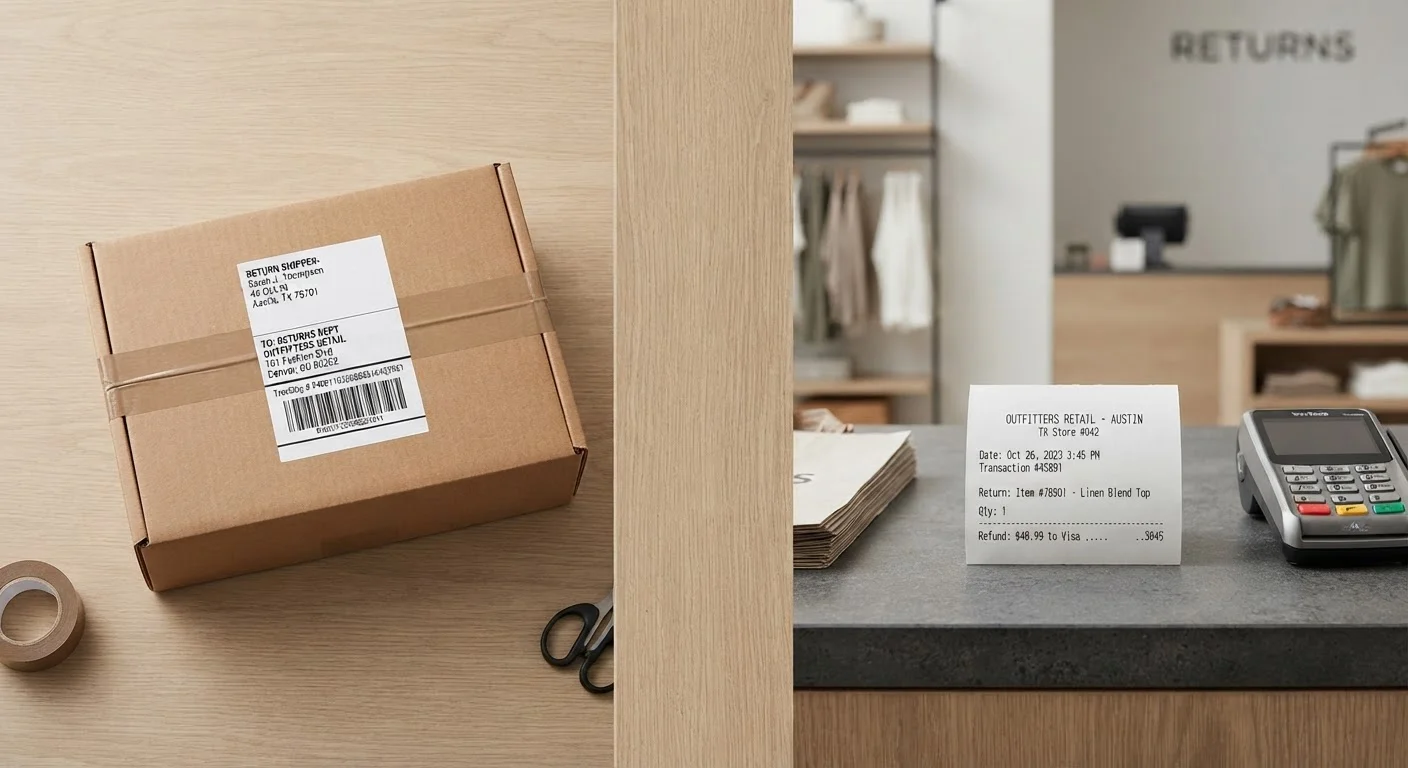
Photo credit: SmartReads.net | Simple Search, Relevant Results
In this article
Return windows, restocking fees, and who covers postage — understanding the key differences before your next purchase.
Key Takeaways
- Online and in-store return windows are often different, even for the same retailer.
- Return shipping costs are frequently the buyer's responsibility for online purchases.
- Restocking fees apply more commonly to online orders than in-store returns.
- In-store returns for online purchases are not universally accepted - verify before you go.
- Final sale and non-returnable item rules can differ by purchase channel.
Why Return Policies Are More Complicated Than They Look
Most shoppers assume the return process is straightforward: bought it, don't want it, send it back or drop it off. In reality, return policies are layered documents full of channel-specific conditions that catch buyers off guard at the worst possible moment - when they're already holding something they don't want.
The gap between what shoppers expect and what policies actually say has real financial consequences. Whether you're dealing with a restocking fee you didn't anticipate or a return window that's already closed, the details buried in checkout pages matter more than most people realize. See our full breakdown of online vs. in-store costs for context on how these policies factor into the total cost of a purchase.
Myth
Online and in-store return windows are the same for the same retailer.
Fact
Many retailers operate separate return policies depending on where the purchase was made, with online orders sometimes carrying shorter windows.
It's a reasonable assumption - same company, same product, same rules. But retailers routinely distinguish between channels. An in-store purchase might carry a 60-day return window while the same item bought online comes with 30 days. This is partly logistical: online returns involve more processing steps, and retailers often tighten windows to manage inventory flow. Always check the policy specific to your purchase channel, not just the general return page.
Myth
You can always return an online purchase to the physical store.
Fact
Cross-channel returns are not universally supported. Some retailers require online purchases to be returned by mail only, or accept in-store returns only for specific product categories.
This misconception leads to wasted trips. While many large retailers do accept in-store returns for online orders, third-party marketplace sellers typically do not - and even direct retailers sometimes exclude certain product lines from in-store processing. Confirm the cross-channel return option explicitly before making the trip. Look for a statement on the retailer's returns page such as "eligible for in-store return" next to your order details.
Myth
The retailer always covers return shipping costs.
Fact
Free return shipping is a retailer courtesy, not a legal requirement, and many sellers - particularly smaller online merchants - pass the cost to the buyer.
Shoppers accustomed to generous return shipping policies from large retailers are sometimes surprised when a smaller or specialty online seller deducts return postage from the refund or requires the buyer to arrange and pay for shipping. Return postage on heavier items can meaningfully reduce what you actually get back. This is one of the hidden costs explored in the real cost comparison between online and in-store shopping. Always check the returns section before completing an online purchase, particularly from unfamiliar sellers.
Myth
Restocking fees are rare and only apply to electronics.
Fact
Restocking fees appear across multiple product categories - including furniture, appliances, and fitness equipment - and are more common with online purchases than in-store transactions.
While electronics do frequently carry restocking fees (often 10-20% of the purchase price), the practice extends to bulky or high-margin categories where handling a return is operationally costly for the retailer. Online purchases are disproportionately subject to these fees because the return logistics are more complex. In-store returns, by contrast, often avoid restocking fees entirely, since the item can be assessed and reshelved immediately. Reading the fee structure before buying - especially for large or expensive items - is essential.
Myth
"Final sale" only applies to clearance items you'd obviously recognize.
Fact
Final sale designations can apply to a wide range of items, including seasonal goods, limited-run products, and certain online-only promotions, and these items are non-returnable regardless of condition.
Final sale terms are not always prominently flagged. Online shoppers in particular may miss a small disclaimer near the product listing or in the checkout flow. This is especially relevant during seasonal sales events, where the urgency of a deal can override careful policy review - a pattern discussed in our article on seasonal shopping pitfalls. If you're unsure whether an item qualifies as final sale, confirm before purchasing rather than assuming you have a return option.
What Shoppers Should Actually Do Before Buying
Understanding return policies before you complete a purchase - not after - is the practical move. A few minutes spent reading the fine print can prevent a costly return experience.
Don't Assume Marketplace Sellers Follow Store Policy
When you buy from a third-party seller on a major retail platform, that seller's return policy governs - not the platform's general policy. Third-party sellers may offer shorter return windows, charge return shipping, or decline returns altogether on certain items. Always click through to the seller-specific returns information before completing the purchase.
For items where sizing, fit, or physical condition are critical - clothing, footwear, furniture - the case for buying in-store first is stronger than many shoppers acknowledge. The scenarios where online shopping works against you are worth reviewing if you're weighing convenience against return risk.
When you do buy online, save every confirmation email, screenshot the return policy page at checkout, and note the exact return deadline in your calendar. For high-value purchases, check whether the retailer accepts in-store returns for online orders - this can eliminate shipping costs entirely. For more structure, six factors worth checking before you decide where to buy offers a practical pre-purchase checklist.
17%
Average retail return rate for online purchases
According to the National Retail Federation's 2023 consumer returns report, online purchases are returned at significantly higher rates than in-store purchases, which averaged around 10%.
58%
Shoppers who check return policy before buying
A 2022 Narvar consumer survey found that a majority of US shoppers now review return policies prior to completing a purchase, up from around 40% five years earlier.
Return policy literacy is one of the lowest-effort, highest-payoff habits a frequent shopper can build. The time you invest upfront consistently outweighs the frustration of navigating a complicated return after the fact.

Author
Shopping Editorial Team
Shopping Editorial Team is the collective byline for our editorial team and contributor network. Articles published under this byline or an editorial pen name are researched, written, and reviewed according to our editorial standards for clarity, consistency, and independence before publication.
View all articles →