
How Retailers Design Both Experiences to Influence Your Spending
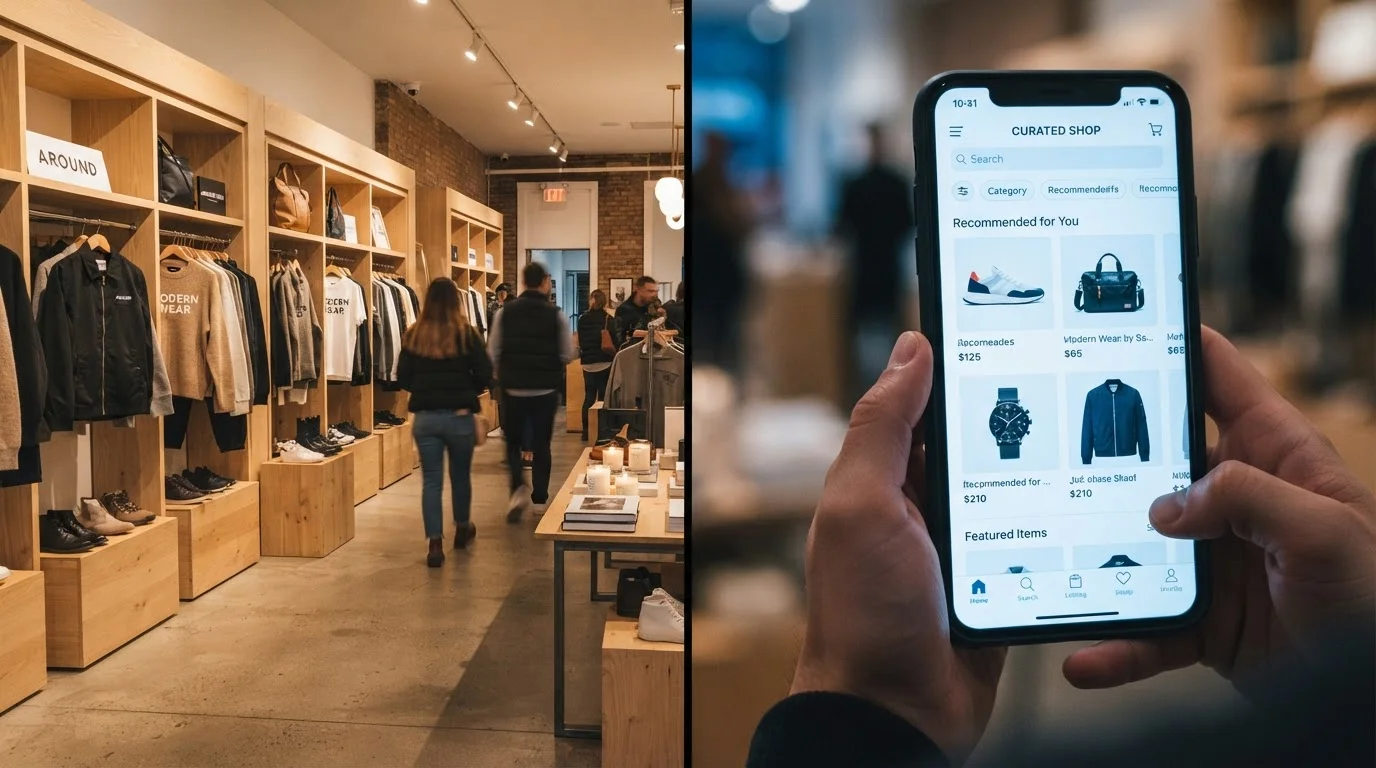
Photo credit: SmartReads.net | Simple Search, Relevant Results
In this article
From algorithmic recommendations to store layouts, learn the tactics shaping your choices so you can shop more deliberately.
Key Takeaways
- Physical stores use layout, lighting, and scent to slow you down and increase exposure to products.
- Online platforms deploy personalization algorithms and friction-reduction tools to lower your guard.
- Both channels exploit specific psychological triggers - scarcity, social proof, and anchoring - just differently.
- Awareness of these tactics is the first step toward making more deliberate, need-based purchases.
- Channel choice matters: the 'right' place to shop depends on the category and your own vulnerability to each environment.
The Architecture of In-Store Influence
Physical retail is one of the most researched fields in consumer psychology, and the insights haven't gone to waste. Store layouts are rarely accidental. Grocery chains position fresh produce at the entrance because it signals abundance and freshness - a psychological primer that puts shoppers in a positive, open-to-spending mindset before they've reached a single shelf.
Lighting is modulated by department. Warm, dim lighting in clothing sections slows foot traffic and encourages lingering. Bright, cool light in electronics signals precision and reliability. Scent - fresh bread near the bakery, ambient fragrance in beauty sections - activates emotional responses that make spending feel more comfortable.
End-cap displays (the shelves at aisle ends) command a significant premium from brands precisely because shoppers consistently perceive those products as deals or featured items, whether or not they carry a discount. Checkout zones are the final pressure point: small, low-cost items placed at eye level exploit the decision fatigue that accumulates through a shopping trip.
Build Your List Before You Browse
Whether you're heading to a store or opening an app, committing to a written list beforehand significantly narrows the window for environmental tactics to take hold. A list shifts the cognitive default from 'what do I want?' to 'do I need this?' - a more resistant framing when facing retail pressure.
Understanding these mechanics doesn't require avoiding stores altogether. See how combining channels strategically can work in your favor: blending online and in-store shopping into a smarter routine.
How Digital Platforms Engineer the Path to Purchase
Online retail has compressed and amplified these same principles into a frictionless digital environment. The most consequential tool is the recommendation engine. Platforms surface 'frequently bought together' and 'customers also viewed' modules not to be helpful in a neutral sense, but because cross-selling measurably increases average order value.
One-click purchasing and saved payment information remove deliberation time - the window in which shoppers are most likely to reconsider. Countdown timers and low-stock indicators trigger loss aversion, a well-documented psychological response where people weight potential losses more heavily than equivalent gains.
Star ratings and review counts serve as social proof, particularly when shoppers are uncertain. Price anchoring - showing a crossed-out 'original' price alongside a current price - is as prevalent online as it is on in-store signage.
~70%
In-store purchases that are unplanned
Research consistently cited in retail industry literature estimates that a substantial majority of in-store purchase decisions are made inside the store rather than before entry.
35%
Of Amazon revenue attributed to recommendations
Amazon has publicly indicated that its recommendation engine drives a significant portion of total sales, illustrating the commercial scale of algorithmic personalization.
2-3x
Higher conversion for end-cap vs. mid-aisle placement
Retail analytics firms have documented that end-cap product placement consistently outperforms standard shelf positioning in driving unit sales.
The channel you shop in shapes the type of pressure you face. For a category-level breakdown of where each channel tends to work better for consumers, see which channel wins by shopping category.
Shopping More Deliberately Across Both Channels
Recognizing these tactics is practical, not paranoid. Retailers invest substantially in environmental and algorithmic design because it works - which means unaware shoppers are consistently more susceptible to spending beyond their intentions.
A few durable strategies help across both environments. Shopping with a specific list before entering either channel reduces the surface area for impulse decisions. In stores, entering from a less-trafficked entrance (when available) bypasses the deliberate 'decompression zone' designed to slow you down and expand your mental shopping list. Online, adding items to a cart and waiting 24 hours before checkout is a simple friction technique that counteracts the frictionless-by-design checkout experience.
It's also worth noting that online convenience can work against you in specific scenarios - easy returns, for instance, can encourage over-ordering and the hassle of returning items ultimately deters follow-through. Meanwhile, the myths around impulse spending often lead shoppers to blame themselves rather than recognize the environmental cues driving those decisions.
The most durable habit is treating your shopping channel as a deliberate choice, not a default. For structured guidance on making every shopping dollar count, pairing awareness of retail tactics with a clear budget framework closes the gap between intention and outcome.
Frequently Asked Questions

Author
Shopping Editorial Team
Shopping Editorial Team is the collective byline for our editorial team and contributor network. Articles published under this byline or an editorial pen name are researched, written, and reviewed according to our editorial standards for clarity, consistency, and independence before publication.
View all articles →