
Buying Tech, Beauty, Groceries, and Clothes: Which Channel Wins by Category
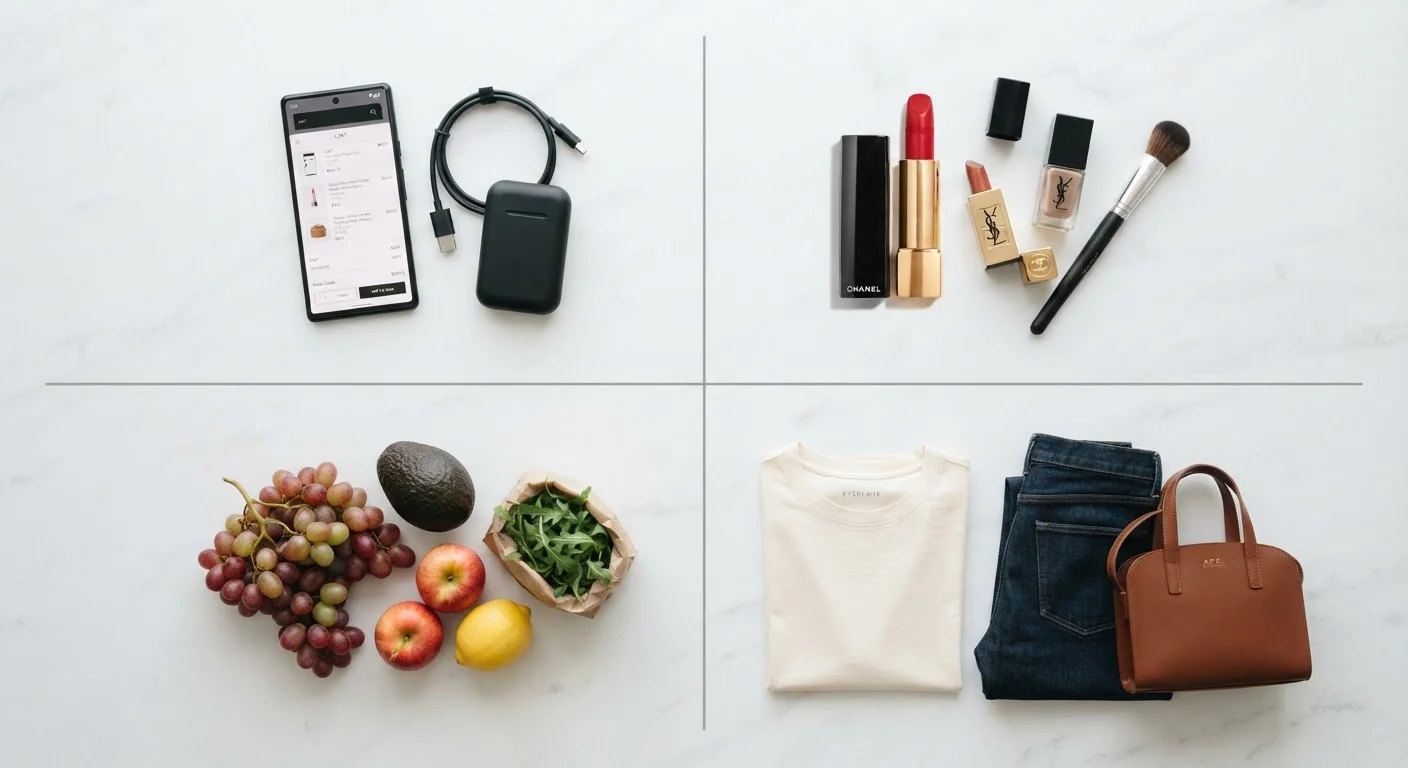
Photo credit: SmartReads.net | Simple Search, Relevant Results
In this article
Not every purchase belongs in a cart. See how online and in-store shopping stack up across the most common buying categories.
Key Takeaways
- Online generally wins for electronics due to broader selection and easier price comparison.
- Beauty products often benefit from in-store testing before committing to a purchase.
- Groceries split by use case: routine staples suit delivery, while fresh produce favors in-store selection.
- Clothing returns remain the biggest friction point in online apparel shopping.
- Matching the channel to the category can reduce buyer's remorse and wasted time.
Why Channel Choice Is a Category Decision
Online versus in-store is rarely a lifestyle choice - it's a category-by-category calculation. The same shopper who confidently orders a laptop online may waste hours managing an ill-fitting jacket return. Each product category has distinct variables: how much tactile evaluation matters, how predictable sizing or quality is, and how much price varies by channel.
Understanding those variables upfront is what separates efficient purchasing from frustrating trial and error. See our pre-purchase checklist for a broader framework you can apply before any buying decision.
| Category | Online Advantage | In-Store Advantage | Recommended Default | |
|---|---|---|---|---|
| Technology | Price comparison, selection, specs | Hands-on demos, same-day pickup | Online (research-heavy) | |
| Beauty | Repurchasing known items, bundles | Shade matching, texture testing | In-store for new items | |
| Groceries - Staples | Convenience, subscription savings | None significant | Online / delivery | |
| Groceries - Fresh | Time savings with good service | Visual and tactile quality check | In-store | |
| Clothing | Replenishment of known-fit items | Fit certainty, no return hassle | In-store for new brands |
Technology: Online Has the Edge
Consumer electronics are among the most research-intensive purchases consumers make. Specs are standardized and publicly documented, so browsing product listings online gives shoppers near-complete information. Price comparison across retailers takes minutes, and shipment tracking is predictable for most major carriers.
In-store tech purchases do offer one meaningful advantage: hands-on experience with display models and same-day availability. For items where tactile quality matters - keyboard feel on a laptop, audio clarity on headphones - a brief in-store evaluation followed by an online purchase (a practice sometimes called showrooming) can combine the best of both approaches.
~20%
Average e-commerce return rate for apparel
Clothing consistently records some of the highest return rates in online retail, according to industry estimates from the National Retail Federation.
63%
US adults who research electronics online before buying
A Pew Research Center survey found that a substantial majority of US adults read product reviews or compare prices online before purchasing electronics, even if they buy in-store.
Return policies for electronics are typically more generous online, though restocking fees can apply. Always verify return window and condition requirements before buying, regardless of channel. For more on how actual costs compare across channels, see the real cost breakdown.
Beauty: In-Store Has Real Advantages
Foundation shades, fragrance profiles, and skincare textures are notoriously difficult to evaluate from photos and written descriptions. Returning cosmetics is also messier - many retailers don't accept used products, and some categories (like mascara or lipstick) carry hygiene restrictions on returns.
In-store beauty counters offer testers, trained associates, and the ability to see how a product looks under different lighting conditions - advantages that matter most when trying something new. That said, repurchasing a known product in a known shade works seamlessly online, often at a lower price when purchased in multi-packs or during promotional periods.
Test In-Store, Repurchase Online
For beauty products you already love, online repurchasing often offers convenience and occasionally better pricing on multi-unit purchases. Use the in-store visit to vet new products - shade, scent, or texture - then shift to online once you've confirmed a product works for you. This approach reduces both waste and return friction.
Groceries: It Depends on What You're Buying
Grocery shopping doesn't fit neatly into one channel. Pantry staples - canned goods, dry pasta, cooking oil, cleaning supplies - are predictable in quality and well-suited to delivery or curbside pickup. Subscription or recurring delivery services can reduce the cognitive load of weekly restocking for these items.
Fresh produce, proteins, and baked goods are a different story. Ripeness, marbling, and visual freshness are qualities that shoppers assess by sight and touch. Many experienced grocery shoppers use a hybrid model: delivery for shelf-stable items and in-store visits for perishables. This approach is explored further in blending both channels into a smarter routine.
Clothing: The Return Problem Is Real
Apparel is the category where online shopping generates the most friction. Sizing varies significantly across brands, and even within brands between garments. Fabric weight, drape, and construction are difficult to communicate through product photography. Industry data consistently shows that clothing has among the highest return rates of any e-commerce category.
In-store shopping eliminates fit uncertainty on the spot, particularly useful when trying a new brand or purchasing something for a specific occasion. Online works well for replenishment - restocking the same jeans in the same size, or reordering a known-fit t-shirt. If you regularly shop online for clothing, understanding when online convenience works against you can help you avoid the most common traps.
Watch Return Windows on Apparel
Many online apparel retailers have tightened return windows to 14-30 days, and some charge return shipping fees. If you're ordering multiple sizes to find the right fit, factor in the cost and time of returns before assuming online is the more convenient option. Buying in-store for first-time purchases from a brand can eliminate this friction entirely.

Author
Shopping Editorial Team
Shopping Editorial Team is the collective byline for our editorial team and contributor network. Articles published under this byline or an editorial pen name are researched, written, and reviewed according to our editorial standards for clarity, consistency, and independence before publication.
View all articles →