
Packing the Car: Space, Safety, and the Gear Worth Bringing
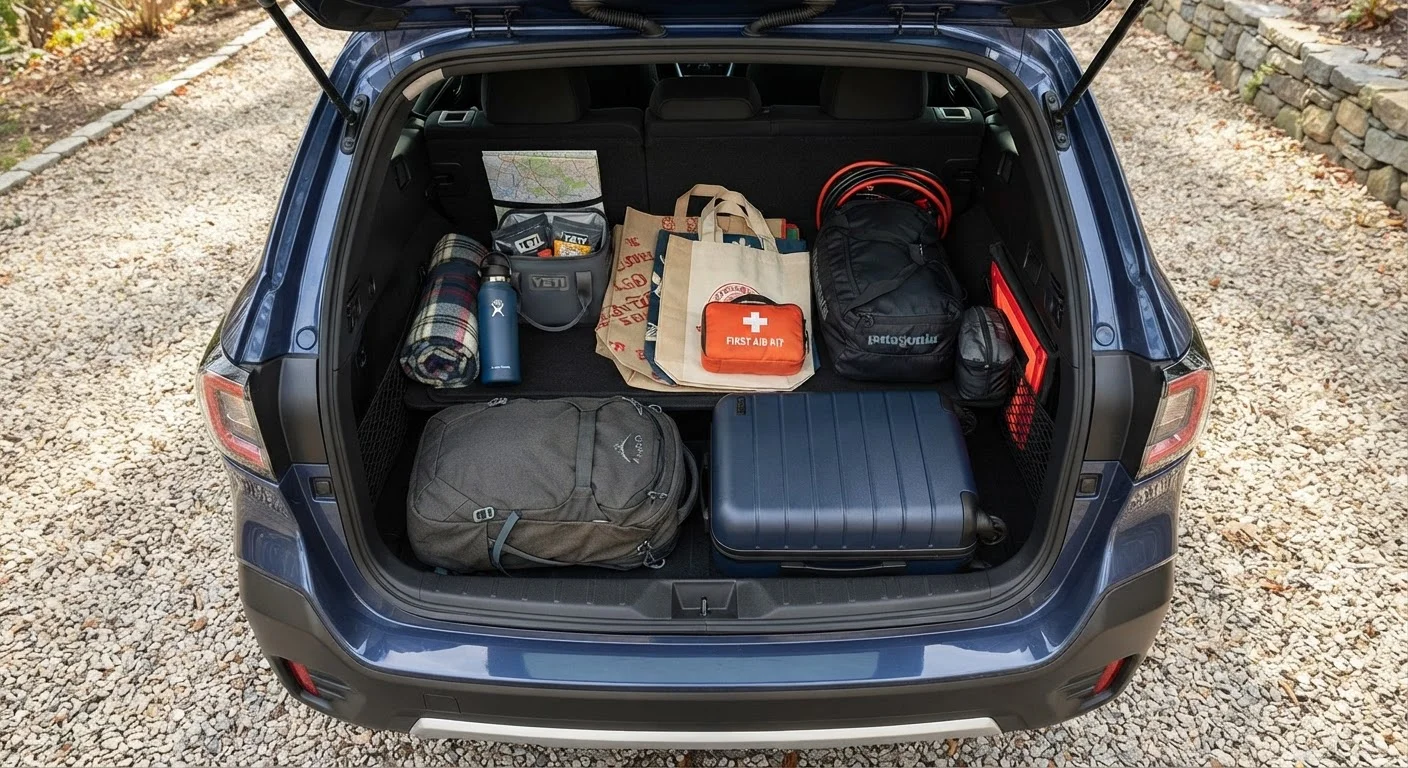
Photo credit: SmartReads.net | Simple Search, Relevant Results
From load distribution to emergency essentials, a practical guide to what belongs in your vehicle — and what quietly wastes space every trip.
Key Takeaways
- Heavy items packed low and forward in the trunk improve vehicle stability and handling.
- An emergency kit is a safety baseline, not optional - it belongs in every vehicle on every trip.
- Loose cargo in the cabin becomes a serious projectile hazard during sudden stops or crashes.
- Roof racks and cargo carriers affect aerodynamics and can noticeably reduce fuel economy.
- Most overpacking happens when drivers skip a pre-departure audit of what they actually need.
Why Packing Decisions Actually Matter
Most drivers treat the trunk like a catch-all. Bags go in, bulky items get wedged around them, and whatever doesn't fit gets tossed on the back seat. It works - until it doesn't. Poor load management affects handling, fuel economy, and cabin safety in ways that aren't obvious until something goes wrong.
The good news: a few deliberate habits cut the risk and the clutter. Whether you're heading out for a weekend or a cross-country drive, the packing choices you make in the driveway follow you the entire trip. See our pre-departure checklist for a full rundown of what to confirm before you pull out.
Distribute weight low and toward the center
Where you place weight matters as much as how much you bring. Heavy items - coolers, tool bags, luggage - should sit flat on the trunk floor, as low as possible and pushed forward toward the rear seat backs. This keeps the vehicle's center of gravity stable and reduces the pendulum effect that makes rear-heavy cars harder to control in turns or emergency maneuvers.
Avoid stacking heavy items above the window line in SUVs or wagons with open cargo areas. High loads raise the center of gravity and increase rollover risk, particularly on highway on-ramps or sudden lane changes.
Heavy items packed low and centered keep your vehicle's handling predictable when it matters most.
Secure everything in the cabin - no loose items
A water bottle left on the back seat can travel at significant speed during a sudden stop or collision. During a crash, unsecured objects become projectiles with force proportional to vehicle speed. This isn't an edge case - it's basic physics that applies on every drive.
Keep the cabin clear of anything that isn't in a seat pocket, a closed bag, or a cargo net. Cargo nets and trunk organizers are inexpensive and solve the problem efficiently. If traveling with children, pay particular attention to what's within reach of rear passengers and what's behind them in the cargo area. For related safety context, see child car seat safety guidelines.
Loose items in the cabin are a projectile hazard - secure everything before you move.
Build a non-negotiable emergency kit
An emergency kit isn't pessimism - it's the baseline responsible preparation for any road trip. At minimum, your kit should include a properly inflated spare tire (check the pressure before departure), a jack and lug wrench, jumper cables or a jump starter pack, a flashlight with fresh batteries, a basic first-aid kit, reflective warning triangles or road flares, and a phone charging cable.
Store the kit in a consistent, accessible location - ideally the side of the trunk rather than buried under luggage. In a breakdown scenario, you don't want to be unloading bags in the dark. For a structured walk-through of pre-drive checks that complement your kit, see this 10-minute safety check.
A properly stocked emergency kit, stored accessibly, is non-negotiable on any trip beyond the neighborhood.
Understand the fuel cost of extra weight and roof cargo
Vehicle fuel economy drops measurably with added weight and aerodynamic drag. The US Department of Energy has noted that excess weight reduces fuel economy, and roof-mounted cargo carriers - even empty ones - increase drag significantly at highway speeds. A loaded rooftop cargo box can reduce fuel economy by a meaningful percentage depending on vehicle type and speed.
The practical takeaway: remove roof racks when not in use, pack only what you'll actually use, and be deliberate about what goes on top of the vehicle versus inside it. For a fuller picture of pre-trip efficiency preparation, this fuel efficiency checklist is worth running through before departure.
Empty roof racks still create drag - remove them when not in use to protect fuel economy.
Edit before you load, not after you arrive
The most effective packing habit is a pre-loading audit. Before anything goes into the car, make a list of what you're bringing and mark each item as essential, useful, or just-in-case. "Just-in-case" items that don't justify their space or weight should stay home.
Common space-wasters: duplicate clothing "in case," full-sized toiletry bottles for short trips, recreational gear that won't get used, and tools already handled by roadside assistance coverage. The goal isn't minimalism - it's intentionality. A well-edited load is easier to manage, reduces cabin clutter, and leaves room for what you actually pick up along the way.
A pre-loading audit takes five minutes and eliminates the clutter that accumulates trip after trip.
Pack hydration and snacks strategically
Long drives without accessible food and water lead to fatigue-driven detours, impulse gas-station purchases, and - more seriously - driver inattention from low energy or dehydration. Keep a dedicated, easy-to-reach bag in the cabin (not the trunk) with water, snacks, and any medications needed during the drive.
Use a soft cooler rather than a hard one for cabin-accessible items - it's easier to wedge into a footwell and doesn't shift. Avoid glass containers for anything in the cabin. Clip-mounted cup holders that attach to seat backs are a practical addition for rear passengers and keep drinks off the seat where they can spill or slide.
Accessible hydration and snacks in the cabin reduce fatigue stops and keep drivers sharper on long drives.
Pack Smart, Drive Confident
None of this requires military-level organization. A 10-minute audit before loading - deciding what's essential, what's redundant, and where things should sit - pays dividends in comfort, safety, and peace of mind the moment you're on the highway.
Do a trunk audit after every trip
Most trunk clutter is cumulative - items added for one trip that never came back inside. After every road trip, take five minutes to clear out what doesn't belong. A consistently clean baseline makes the next pre-departure load faster and more deliberate.
For a broader look at pre-trip preparation that goes beyond the trunk, our road trip planning guide breaks down which elements genuinely need advance thought and which you can leave flexible.

Author
Autos Editorial Team
Autos Editorial Team is the collective byline for our editorial team and contributor network. Articles published under this byline or an editorial pen name are researched, written, and reviewed according to our editorial standards for clarity, consistency, and independence before publication.
View all articles →